What HD-2D Is: Pixels, Depth, and Light in Video Games
Octopath Traveler's style combines pixel characters with three-dimensional environments and lighting that guides the eye.
 Staff Donotaku Published:
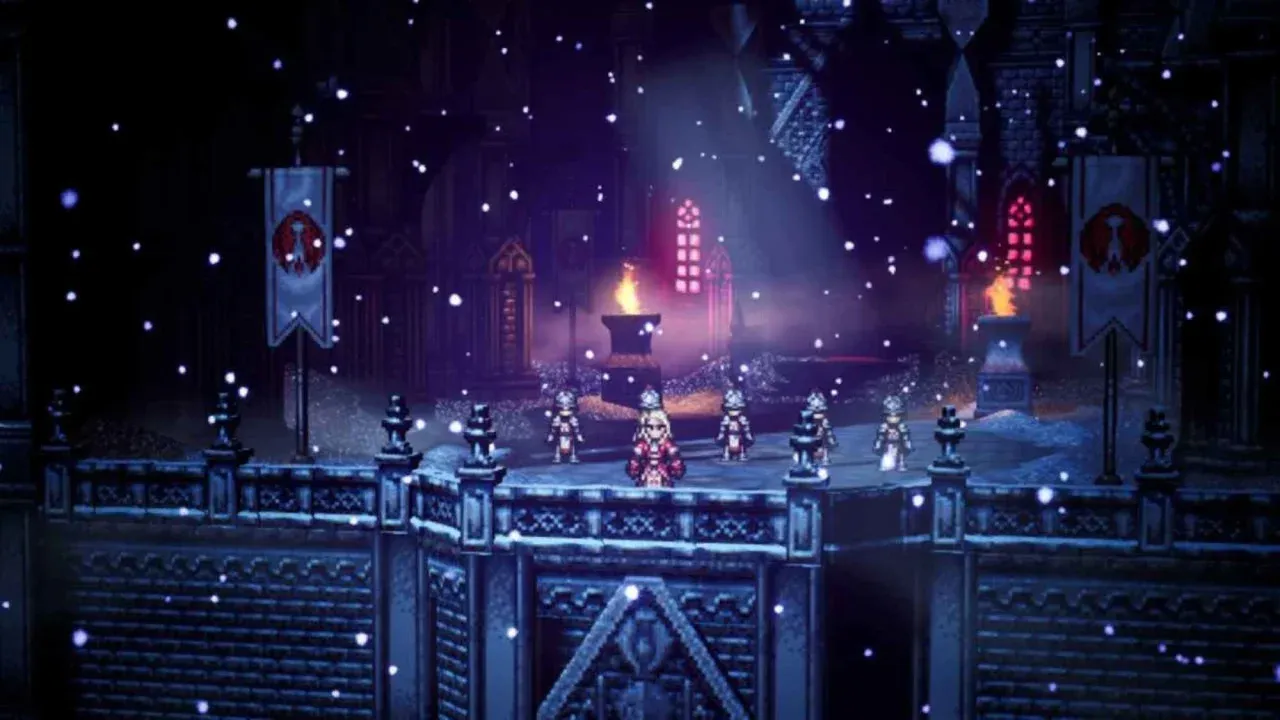 Image from Anitsu's original edition.
In a game with an HD-2Daesthetic, the characters may evoke a pixel RPG while the environment has volume, perspective, and depth. The combination isn't simply a matter of increasing an old game's resolution: it uses different visual resources to build a single scene.
What's Combined On Screen
The sprites retain a recognizable two-dimensional representation. The three-dimensional environment allows the position of elements to vary and works with the distance between foreground and background. On that foundation, lighting, shadows, and effects help the two parts read as a shared space.
Depth of field can also direct attention: a blurred background or a foreground that frames the scene makes the image resemble a diorama. It's a compositional tool, not a requirement that every scene must look blurry.
From Octopath Traveler to the Remakes
Square Enix uses the HD-2D designation for a visual line associated with titles like Octopath Traveler. In its LIVE A LIVE announcement, the company expressly presented the new version as an HD-2D remake.
The appeal of a remake with this approach lies in deciding what to preserve and what to reinterpret. Keeping characters in pixels doesn't force you to reproduce the original game's camera, environment scale, or lighting treatment. Each of those decisions changes how a place is traversed and understood.
Why It's Not the Same as Just Any Pixel Art
Pixel art describes a way of constructing images; HD-2D identifies a specific approach that combines that appearance with depth and the tools of a three-dimensional scene. A game can have excellent sprites and flat backgrounds without belonging to that proposal.
Nor does the label serve as an automatic endorsement. Character legibility, contrast with the environment, and clarity of paths still matter. A flashy effect can help reveal a scene or make it harder to tell where to go.
What to Look For While Playing
Notice how the light changes when entering a building, which objects occupy the foreground, and how interactive elements are distinguished from the scenery. Comparing those resources across different scenes lets you appreciate the artistic work in more detail than simply describing it as nostalgia with modern graphics.
Originally published on Anitsu by Kim Seo-yeon. Text reviewed and updated for DonOtaku on November 5, 2026; the original publication date is preserved.
0 comments
Sign in to leave a comment
Tell everyone what you think about this story.
No comments yet. Be the first.
Keep reading

Bleach Mirrors High arrives free on iOS and Android tomorrow with a story by Tite Kubo
Mariana García · 27 October 2026
Cyberpunk 2077 hits 3-year player peak thanks to Edgerunners 2
Laura Martínez · 23 October 2026

The Elusive Samurai anime returns to Eiketsu Taisen with a reissue of its collaboration
Laura Martínez · 22 October 2026