5 anime whose success invites discussion of their weak points
An opinion column about expectations, development, and animation. Popularity and personal enjoyment are not the same.
 Staff Donotaku 14 February 2026
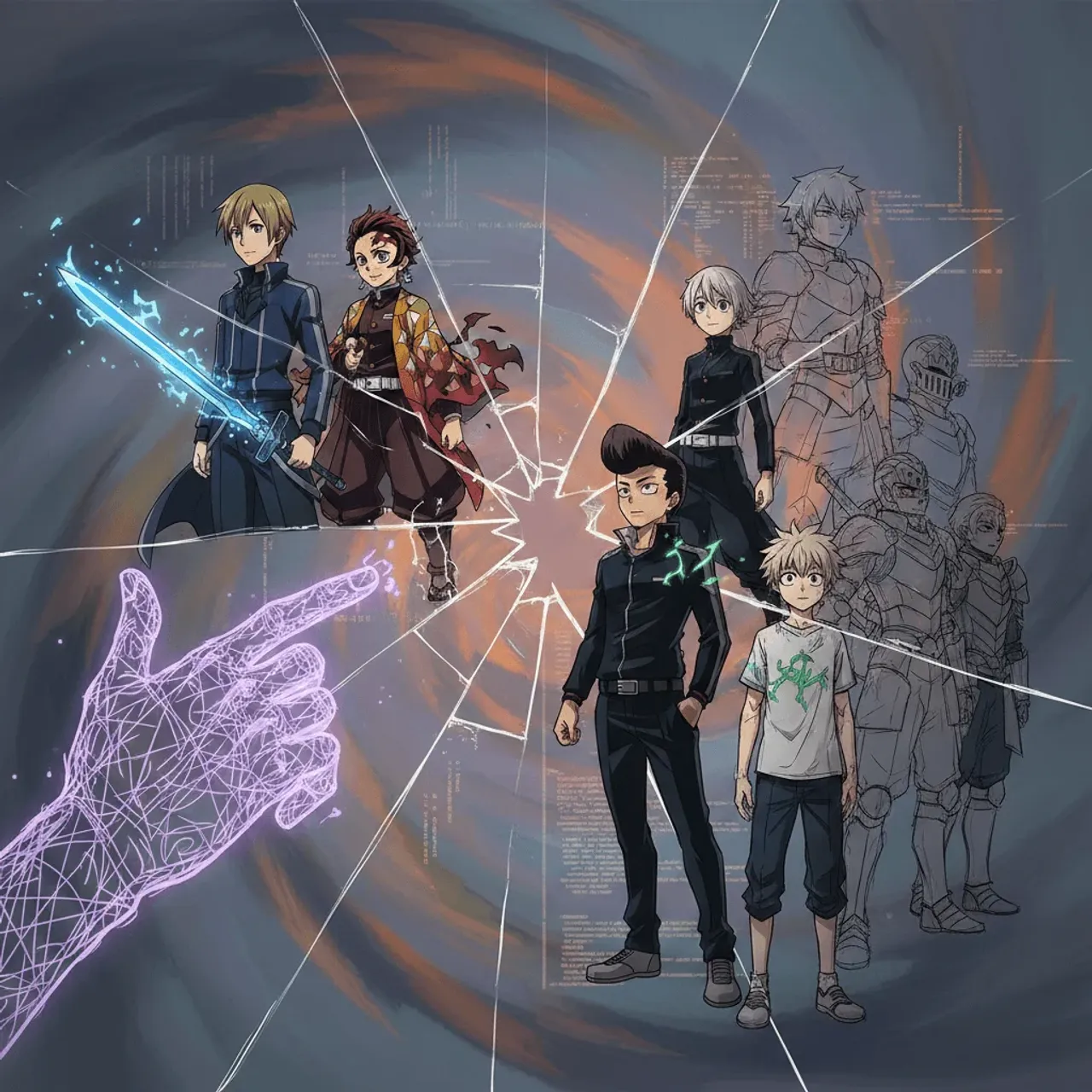 Image from the original Anitsu edition.
The label "overrated" often says as much about the viewer's expectations as it does about the work itself. A series can deliver memorable battles and still disappoint someone who was looking for a different kind of development. This column revisits five cases to discuss their weak points, not to establish an objective measure of what each person should enjoy.
1. Sword Art Online: a premise with several directions
Being trapped in a video game world sets up appealing rules and conflicts. The discussion begins when the story changes setting, scope, and priorities: those who came for the collective survival may miss having more attention paid to those processes.
That doesn't invalidate the appeal of its protagonists, nor does it mean all its arcs work the same way. The criticism is more useful when it specifies which part of the series it's evaluating, rather than using a single stretch to sum up the entire franchise.
2. Demon Slayer: the weight of the staging
Its animation and the way it presents combat are part of the storytelling, not an ornament that can be subtracted to uncover its supposed real value. The critical question is a different one: whether its conflicts and characters are enough for those who expect something more than audiovisual intensity.
A recognizable structure can make emotional connection easier or feel predictable. Both readings are possible without turning enjoyment of the series into a lack of judgment.
3. Tokyo Revengers: persistence and frustration
Takemichi forces you to live with a protagonist who doesn't immediately control his circumstances. His insistence can work as an emotional engine and, at the same time, produce fatigue when the viewer feels that the difficulties repeat without enough evolution.
The disagreement revolves around pacing and how much change needs to be perceived for that perseverance to remain interesting.
4. My Hero Academia: distributing a large cast
The abundance of characters offers many ways into its world, but it also makes visible who gets the time. Someone attached to a supporting character may feel that their possibilities are subordinated to the central plot.
Rather than claiming the series "stagnates," it's worth examining which arcs develop its ideas and which leave expectations open.
5. The Seven Deadly Sins: not all stages are equal
The discussion about its adaptation needs to differentiate between seasons and production conditions. Changes in how the battles are presented can affect enjoyment, but they don't automatically turn all its episodes or characters into the same problem.
Popularity doesn't prove perfection, just as a personal disappointment doesn't prove that everyone else is wrong. Explaining where an expectation breaks allows us to talk about these works with more precision than a prestige ranking.
Originally published on Anitsu by Sebastián Mamani. Text revised and updated for DonOtaku on November 5, 2026; the original publication date is preserved.
0 comments
Sign in to leave a comment
Tell everyone what you think about this story.
No comments yet. Be the first.