Director of animated film 'Nie Xiaoqian' pulls his movie for cloning a voice actor's voice with AI
The filmmaker admits he didn't check the source of the AI-generated voices, and 729 Voice Studio calls for more control over copyright.
 Laura Martínez 9 October 2026
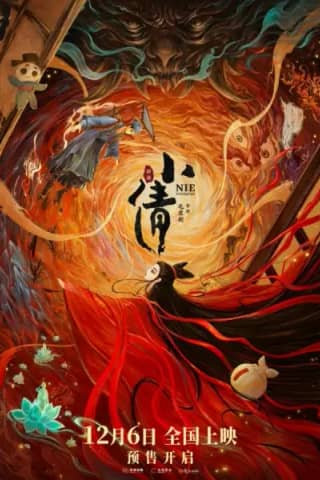
The animated film Nie Xiaoqian has been pulled after it was discovered that one of its characters' voices was virtually identical to that of Yang Tianxiang, a voice actor from the Chinese studio 729 Voice Studio. Director Sun Chenxi admitted he used an AI model to generate the dialogue and didn't verify where those voices came from.
The case came to light in late August when several viewers noticed the resemblance between the character and the actor's voice. The film was withdrawn, and in September the director gave his side of the story: "I made this work with my own AI creation platform, and the voices were automatically generated by an external model integrated into the platform. When choosing the sound, I didn't carefully assess its origin or ownership."
Sun Chenxi went further and admitted a fundamental mistake: "I thought that by paying for an AI product, I already had the right to use all the material." After the scandal, he decided to take down the video, re-upload it with real actors' voices, and commit to using only sounds that can be traced and authorized.
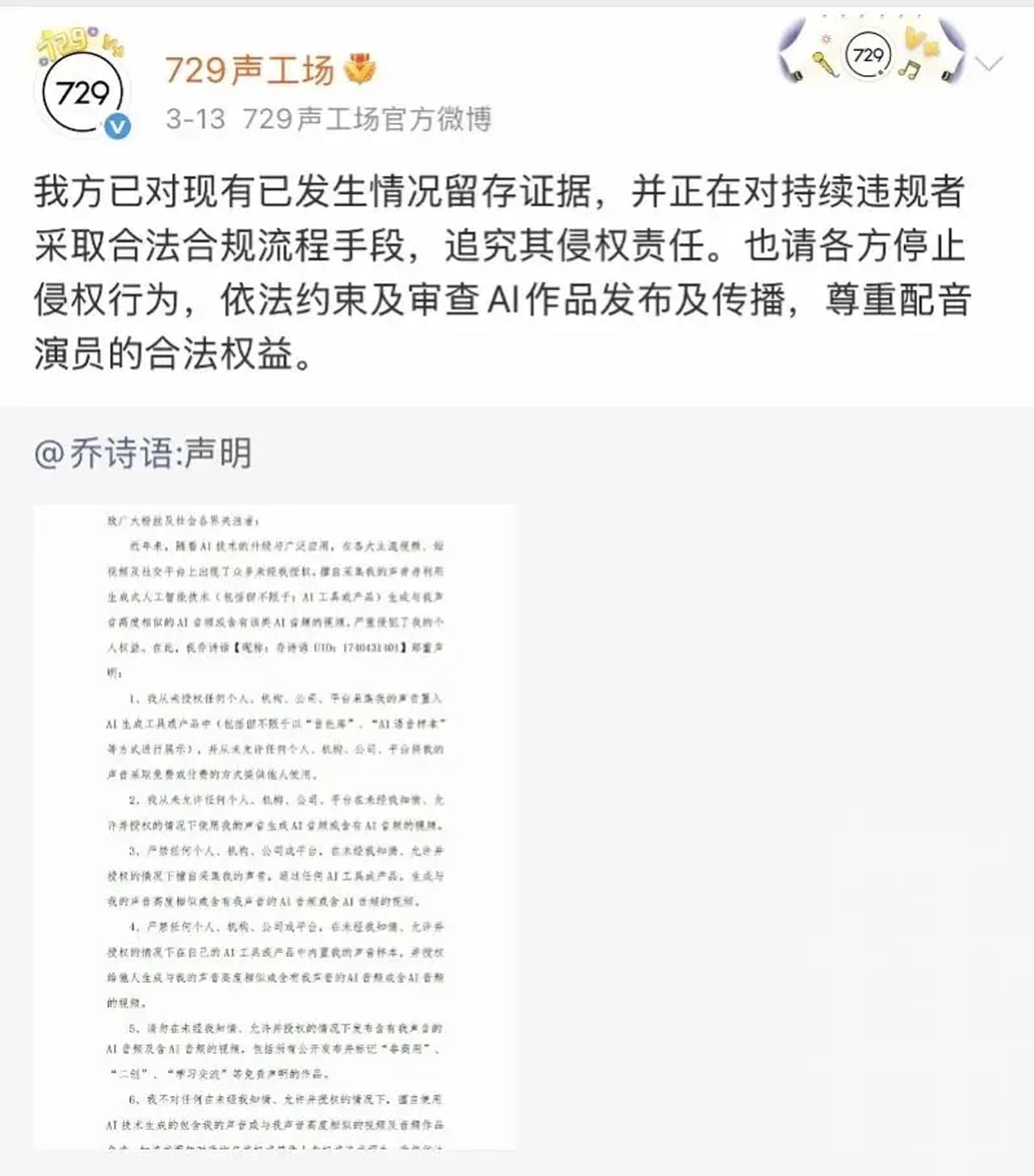 Statement on the controversy over the use of AI-generated voices in the film.
A recurring problem in Chinese dubbing
This isn't an isolated case. On September 29, Shanghai saw the resolution of the first lawsuit over synthetic voice and personality rights. A company argued that its AI tool couldn't trace the origin of the audio files, but the court found it liable for infringing a voice actress's rights and ordered it to pay 50,000 yuan in damages.
The ruling relies on the Supreme People's Court regulations on artificial intelligence litigation, which took effect on September 7. The standard is clear: if a generated voice resembles a real person's and is used without permission, it's an infringement.
729 Voice Studio, one of China's best-known dubbing companies, has long denounced this practice. In an interview with N Video, they explained the most common misunderstanding among creators: "Many think that by paying for an AI tool, the resource library has already been paid for to the original rights holders or that the content it offers is legal. But most of these tools don't pay for their database: they use mass scraping or collection from the internet."
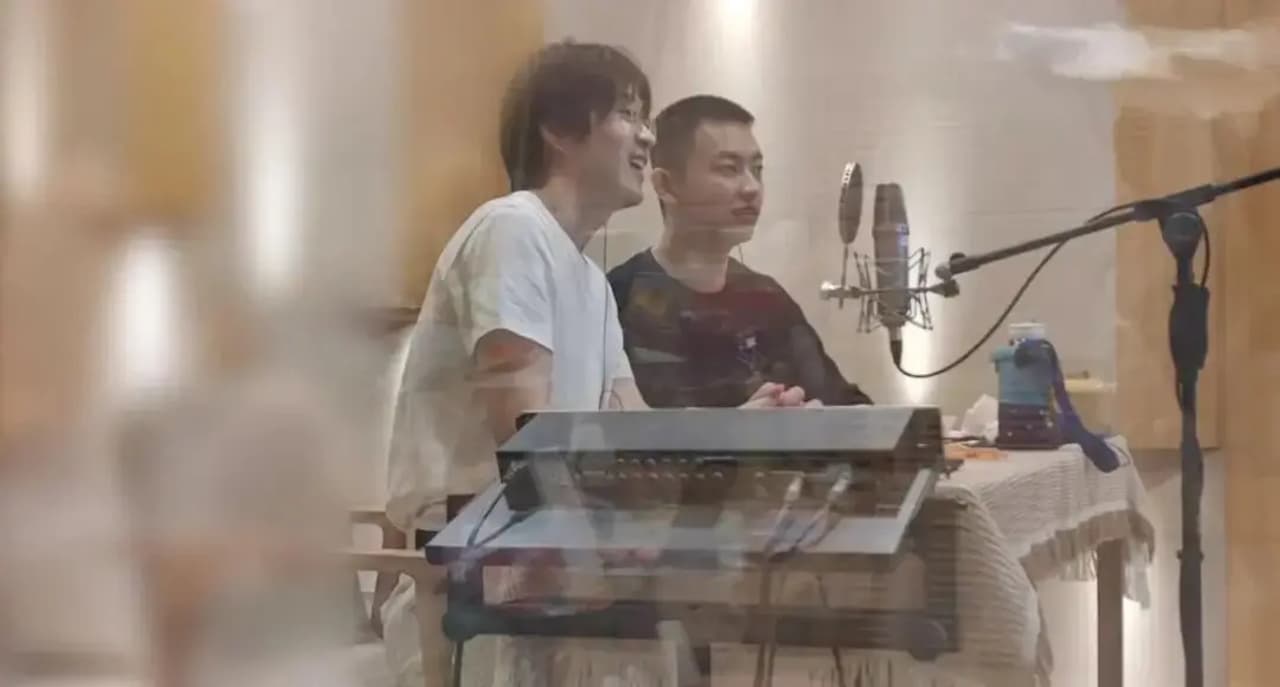 Two people working in a dubbing recording studio.
The legal gap and the creator's responsibility
The studio also points out that the terms of use of almost all AI platforms include clauses that release the company from liability: "Content is sampled from the web and the platform is not responsible for copyright." In practice, this makes the creator solely responsible if a lawsuit arises.
Yang Tianxiang, the actor affected by Nie Xiaoqian, had already published a statement in March making it clear that he does not authorize any person, institution, or platform to use his voice to train AI tools. Other actors from the studio have made similar statements on social media.
The problem isn't limited to this film. An investigation by Nandu found that on the ViiTor AI platform, uploading just three seconds of original audio is enough to clone a voice in minutes. It also found voice fragments of Lü Yanting, the voice actress for Ne Zha, in public sound libraries used by thousands of people. On second-hand marketplaces, voice cloning sells for less than one yuan per 50 characters.
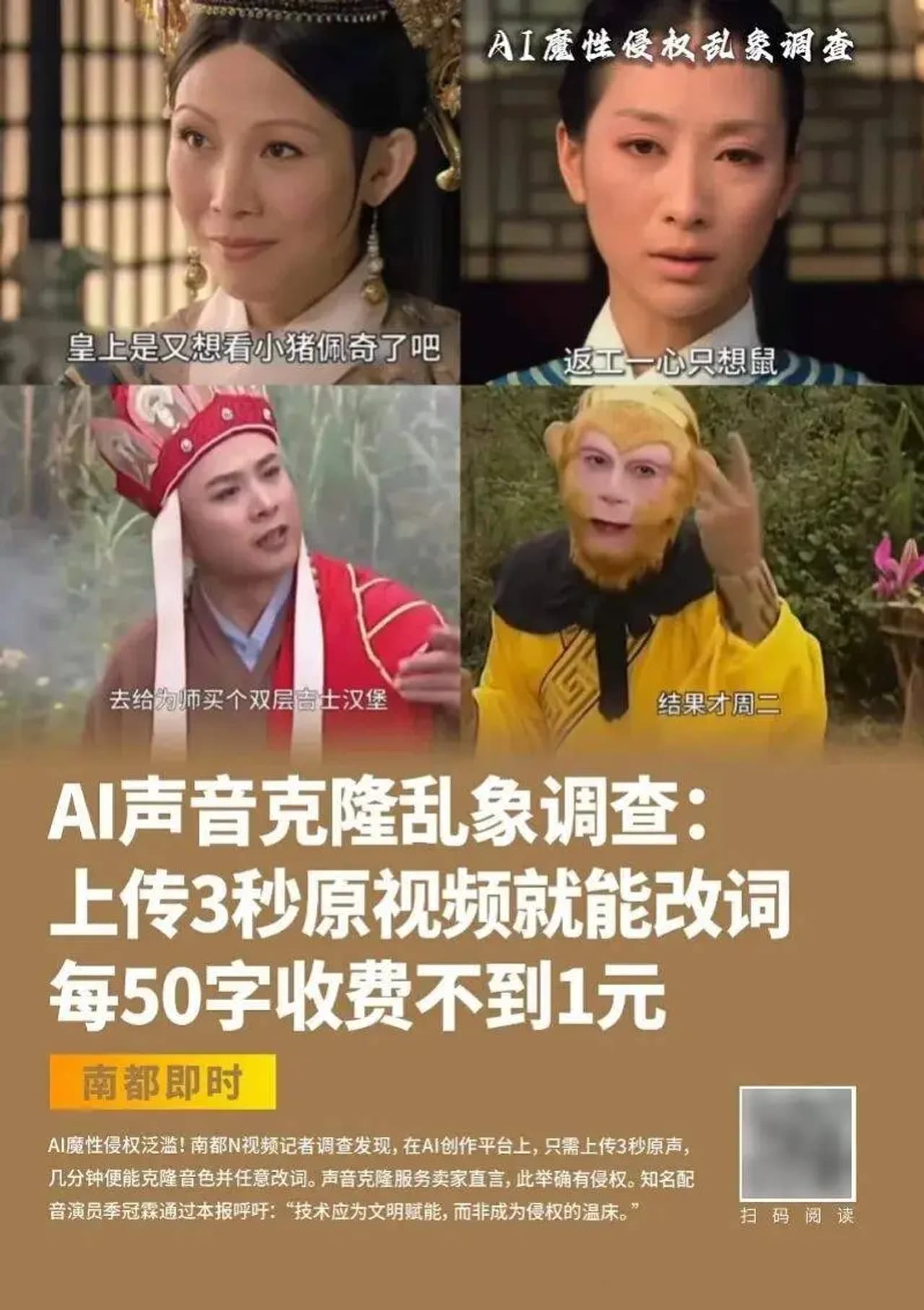 Character images related to the dubbing studio and the controversy over AI voices.
What the dubbing studio is asking for
At 729 Voice Studio, they insist that the solution lies in traceability. "AI generates content from previous artistic achievements; it doesn't come from nowhere. Without awareness of origin, there will always be legal risk," they explain. They ask that generation and distribution platforms clearly warn creators about the proper use of material.
The studio also highlights the personal cost of these cases. For a voice actor, discovering their voice in a work they didn't do is "a creative wound." Then, when they file a claim, they have to prove that the voice is theirs and often face attacks and insults, which multiplies the damage.
China's new AI regulations have now been in effect for a month. In the dubbing industry, they're seen as a first step: "The law gives us rules and gives creators confidence to embrace technology without fear," the studio concludes.
Titles mentioned
0 comments
Sign in to leave a comment
Tell everyone what you think about this story.
No comments yet. Be the first.
Keep reading
#Zombie sagashitemasu unveils episode 2 synopsis: Yuu on alert for a 'visitor'
Laura Martínez · 9 October 2026
Ghost of Tsushima Legends Anime Delayed to 2028
Juan Castillo · 9 October 2026

Kyoto Animation brings its mascots together for an event celebrating the end of Hibike! Euphonium
Mariana García · 9 October 2026