KADOKAWA Brings Its 'Editorial Office' to Anime Expo to Recruit Foreign Mangaka
The Japanese publisher debuted an in-person portfolio review format in Los Angeles and is already preparing new stops in Taiwan and other Asian countries.
 Laura Martínez 8 October 2026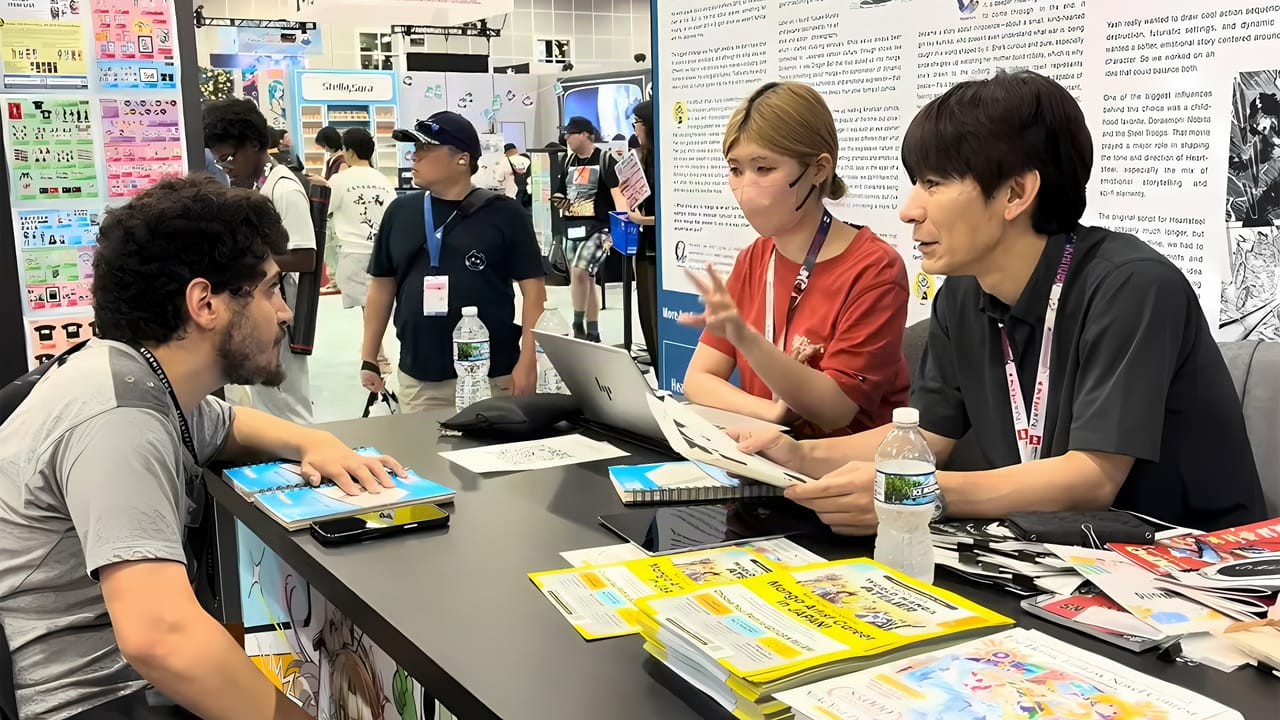
KADOKAWA has taken another step in its strategy to recruit international talent. During Anime Expo 2026, held in July in Los Angeles, the publisher organized its first OnSITE Portfolio Review, a space where Japanese editors received the work of foreign creators in person and gave them corrections and advice on the spot.
The initiative is part of the KADOKAWA WORLD MANGA ATELIER project, which launched in April 2026 and is designed specifically for creators living outside Japan. Although the publisher already accepts works online, the team in charge wanted to test the in-person format to connect with authors in a different way.
According to the editors from the international manga division, the difference between receiving a manuscript by mail and sitting in front of the author is enormous. "Seeing someone's reaction when you give them feedback, noticing their enthusiasm, or adapting your explanation to what they're understanding is something that only happens in person," one of them commented in the interview published by the group's portal.
Why Anime Expo and Not Another Event
The choice of Anime Expo was no accident. The United States is the country from which the most submissions arrive for the manga contests organized by KADOKAWA, and this convention brings together thousands of manga and Japanese anime fans every year, many of whom draw or aspire to become professionals.
During the event, the publisher's booth attracted both creators who already had their portfolio ready and curious attendees who came over after seeing the signs. Some took flyers for friends or family members who draw, which confirmed to the organizers that there are still many potential authors who are unaware of these opportunities.
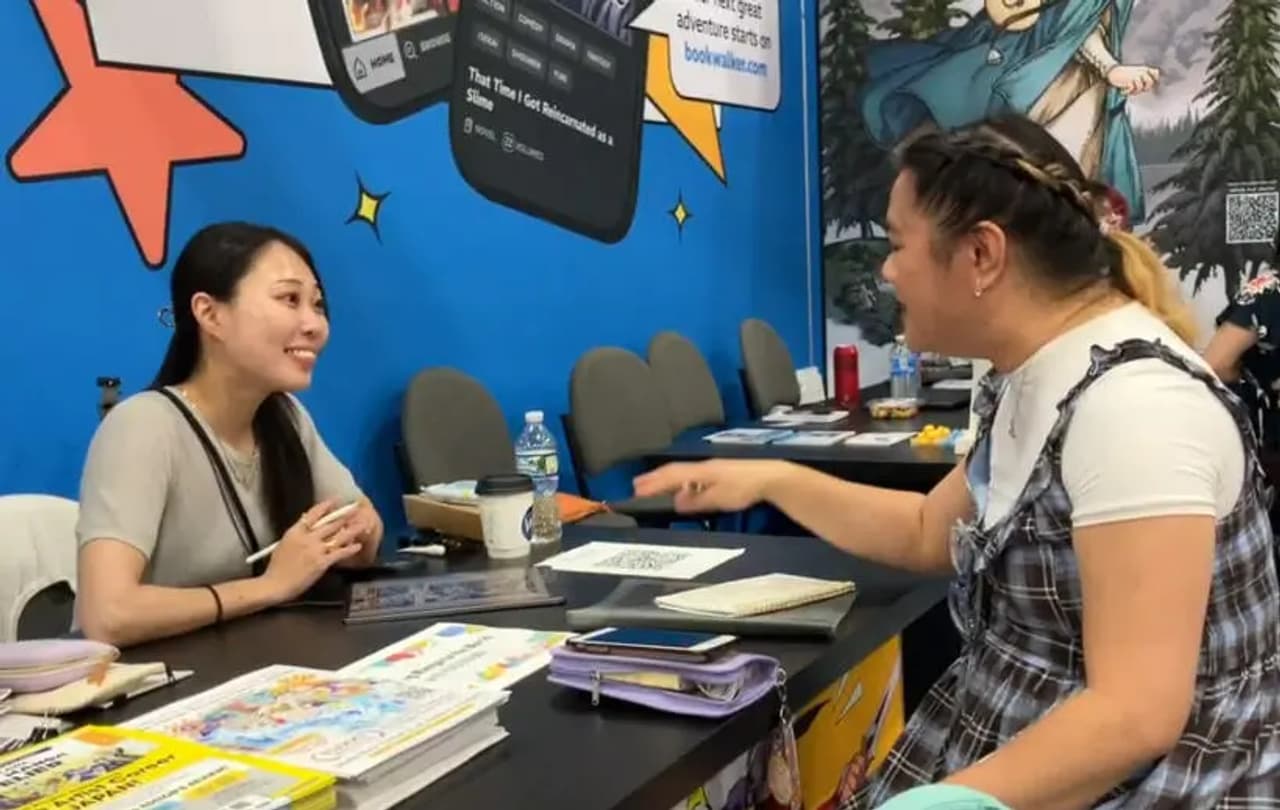 Sign for the OnSITE Portfolio Review at Anime Expo 2026.
The reception surprised even the editors themselves. Several participants brought thank-you cards or small gifts for the team, something that, they admitted, doesn't usually happen at the portfolio sessions they organize within Japan. For attendees, being able to show their work to a Japanese editor was a special occasion.
What Creators Outside Japan Draw
The editors detected clear patterns in the works submitted. Most of the authors knew Japanese manga very well and cited specific titles and authors, but when it came to storytelling they tended to rely on text: lots of dialogue, internal monologues, and explanations, a direct inheritance from Western comics and graphic novels.
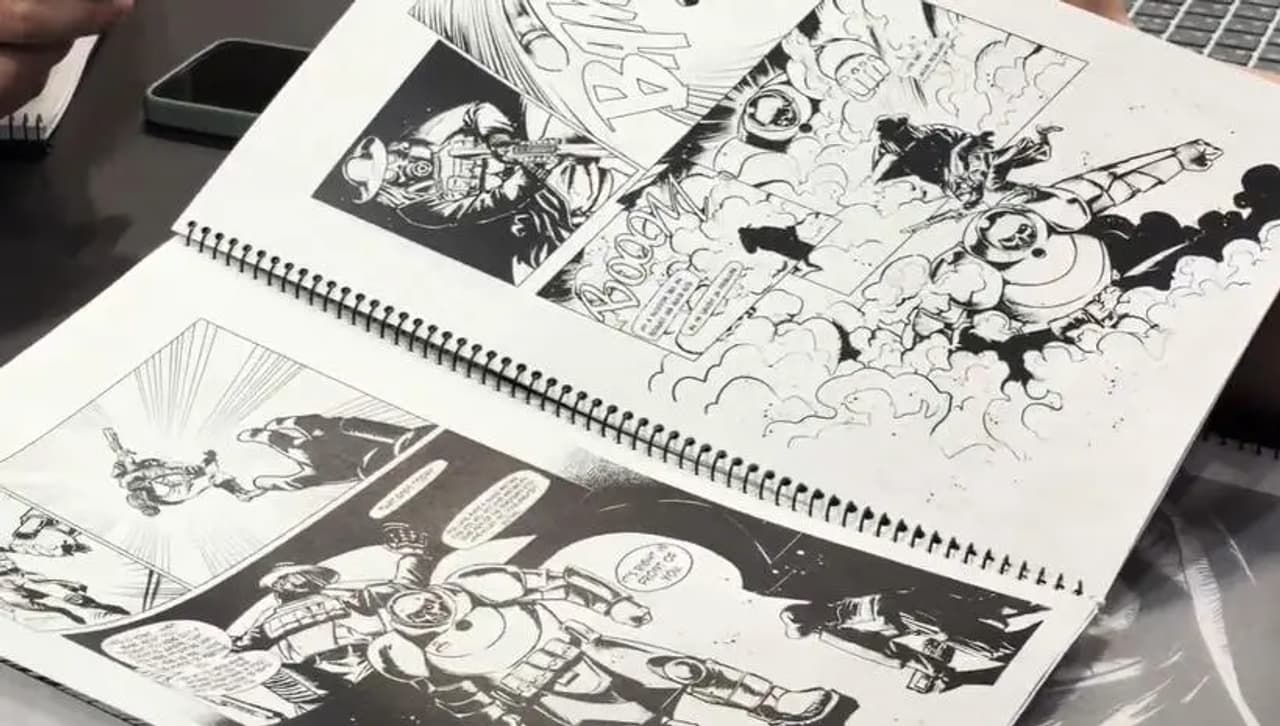 Pages of a black-and-white comic with action illustrations.
That difference in approach shaped much of the advice they gave during the convention. Those who wanted to publish in Japan were told that manga aims for the reader to feel the scene, not to read it. "Here you don't need to explain what's happening; try drawing a panel that makes the reader feel it," was one of the recommendations they repeated.
They also talked about the use of silence, pauses, and the weight of page composition, resources that are hard to convey without having the original in front of you. The in-person format allowed them to point to specific pages and compare with examples of Japanese manga in the moment, something that gets lost over video calls.
The Challenge Isn't the Language, It's the Nuance
One of the most interesting parts of the interview comes when they talk about translation. The team highlights that the problem isn't finding the equivalent word, but preserving the tone. Terms like moe or expressions like honwaka have no exact equivalent in English, and the same goes for the nuances of Japanese personal pronouns or catchphrases like the dattebayo from Naruto.
Additionally, when a script moves from English to Japanese, the text grows, and that affects the size of the speech bubbles and the page composition. That's why the editors reviewed each proposal already thinking about how it would look published in Japanese, not just whether the story worked in its original language.
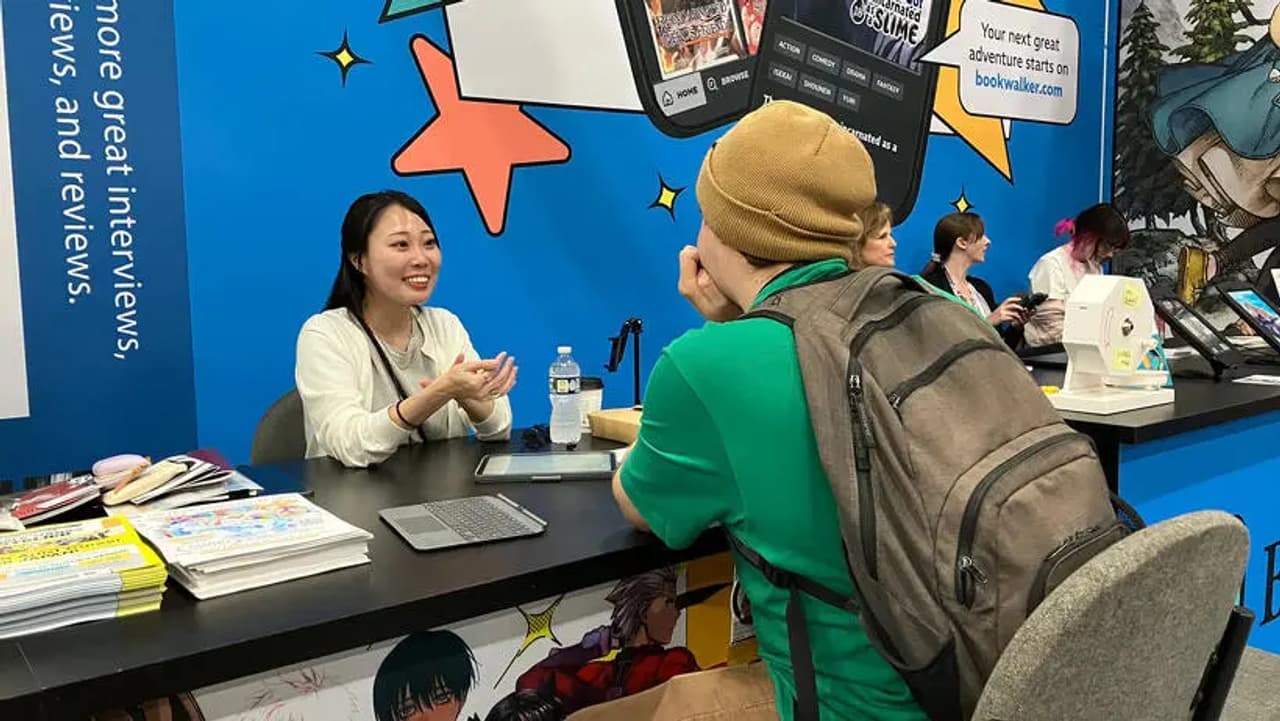 An editor talks with a visitor at the KADOKAWA booth.
The first edition of this OnSITE Portfolio Review won't stay in Los Angeles. The KADOKAWA team is already working on bringing the format to Taiwan and other Asian countries, convinced that each region will contribute different styles and ways of storytelling. The publisher also keeps the online route open for those who can't attend these events.
0 comments
Sign in to leave a comment
Tell everyone what you think about this story.
No comments yet. Be the first.
Keep reading

Crunchyroll Manga arrives in the UK, Ireland, South Asia, and ANZ
Javier Fernández · 8 October 2026

Pokémon Scarlet and Violet manga releases volume 6 on October 13
Mariana García · 8 October 2026

Kuaikan Manhua unveils Livo, its bid to become the Disney of the AI era
Mariana García · 7 October 2026