One Piece turns 27 on television: how such a long adventure holds up
The anime premiered on October 20, 1999 and is still airing with a continuity that mixes adaptation, memory, and different scales of storytelling.
 Javier Fernández 20 October 2026
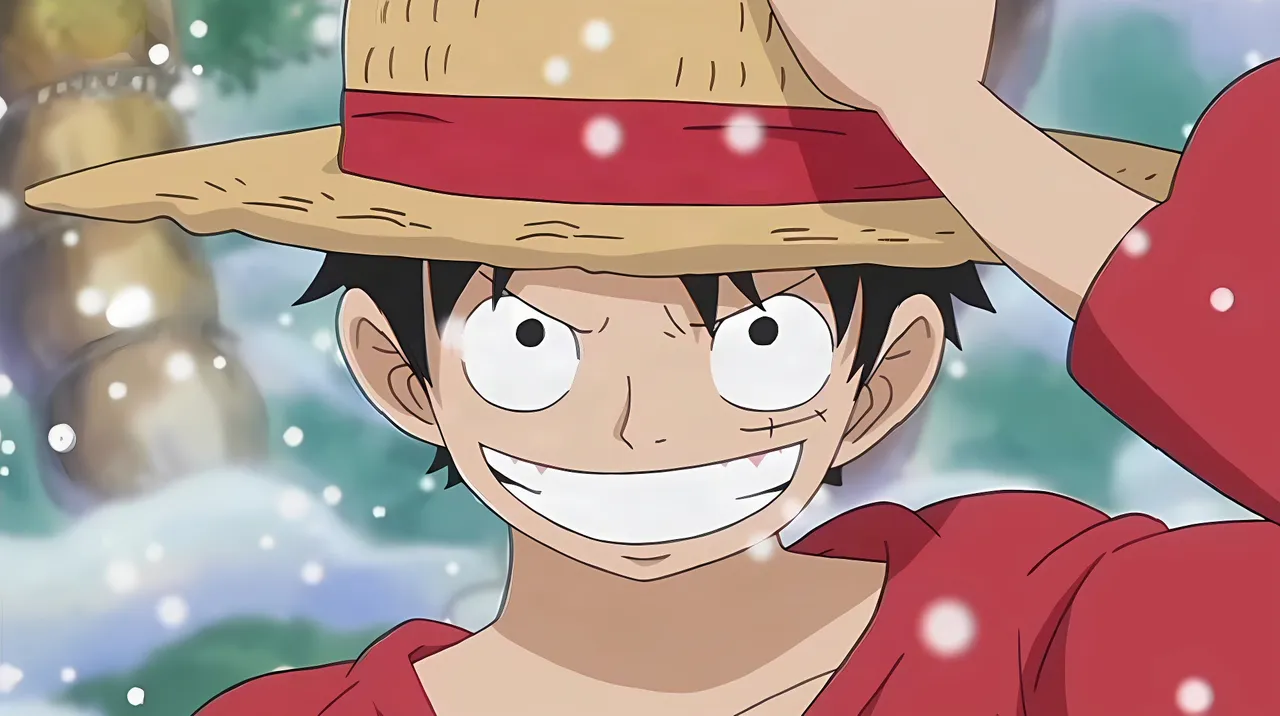
On October 20, 1999, the first episode of One Piece aired. Twenty-seven years later, the series is still on the air, and its beginning is a chance to look at more than just the distance traveled: how an adventure is built that doesn't depend only on adding episodes.
Toei's official record keeps that date as the start of the broadcast. Going back to the chapter where it all began makes it possible to observe decisions about adaptation, pacing, and memory that explain why Luffy's story has been able to last so long.
A promise before an inventory
The first episode brings together Luffy, Coby, and Alvida in a situation that shows ambition, fear, and action. There's no need to present all the rules of the world at once. The entry point has a simpler job: to make a desire understandable and to show how that desire affects another person's life.
The title announces an enormous quest, the treasure that gives the work its name, but a conversation can give it a personal dimension. If the adventure only grew through names and territories, information would pile up without increasing interest. Continuity needs consequences that can be recognized in the characters.
A destination provides direction; relationships and decisions provide reasons to go along with each stage.
Adapting a page means giving it a duration
Eiichiro Oda's manga and Toei Animation's anime work with different times. A panel brings together action, text, and detail in a space the reader moves through at their own pace. Animation has to decide how long each piece of information stays, how a voice enters, and what is heard during a pause.
A gesture can appear as an instant or unfold over several moments. The difference affects anticipation, humor, and attention. If a reaction is stretched out, it might let an emotion be noticed or it might interrupt a scene's momentum. Its function is better understood by looking at the context than by measuring seconds in isolation.
The same goes for the scale of an action. The framing can move closer to an expression or make it possible to understand positions within a space. The adaptation organizes what we see first and what we need to remember. Not every decision has to reproduce the exact layout of the page to keep a relevant narrative relationship.
That doesn't mean any change is automatically an improvement. The useful question is what the version achieves and what it modifies in the reading. Comparing media allows us to observe different resources; turning fidelity into a count of coincidences can leave out pacing, interpretation, and clarity.
The audience's memory in a long story
In a long adventure, a name or an object can return after many intermediate experiences. The reunion depends on something having left a mark. Remembering doesn't mean keeping all the data: sometimes an emotion, a promise, or the consequence of a decision remains before the exact order of events.
This makes it possible to distinguish a reminder from a repetition with no function. A return can reorganize what we know or connect two moments. Another repetition may add nothing for a particular viewer. The evaluation depends on the place it occupies within the story and on how the meaning of the returning information changes.
There are also different ways of getting into the series. Someone who follows a broadcast over time and someone who watches several episodes in a row experience different intervals. The work is the same, but the distance between memories changes. That condition helps explain why pacing can be perceived in different ways.
There's no need to declare one experience legitimate and another wrong. You can describe what form of consumption is being considered and what effect it has on attention. The conversation about a long series improves when it acknowledges those conditions instead of treating every difference in perception as a lack of patience or commitment.
Dates matter too
Toei keeps October 20, 1999 as the start of the broadcast. Its communication about the thousandth episode, published in 2021, makes it possible to recognize another milestone without confusing it with the present. A historical document tells what was announced at that time; it should not be used as a current episode count.
This precaution is useful during anniversaries. A publication can mix the beginning of the manga, the anime, and an adaptation with live actors. They are related projects, but they have different calendars and teams. The date being commemorated should correspond to the version being discussed.
The credits also deserve that precision. The original work is linked to Oda and Shueisha; the animated production, to Toei Animation. Recognizing that basis doesn't resolve all the attributions of a particular sequence. To assign animation, direction, or a specific visual decision, you need information about that specific work.
The anniversary invites us to go back to the beginning and observe what is still recognizable: an ambition, a way of relating to others, or the impulse to move toward a place not yet known. That persistence doesn't require every stage to be seen or felt exactly like the previous one.
One Piece allows us to talk about duration as a creative problem. Keeping an adventure going isn't just about postponing an arrival. It requires producing experiences that make the journey meaningful and preserving relationships between the new and the remembered. Twenty-seven years of television offer many entry points for looking at how that continuity is built.
What moment in the series made you stay until today? Tell us in the comments.
Titles mentioned

0 comments
Sign in to leave a comment
Tell everyone what you think about this story.
No comments yet. Be the first.