Kin-iro Mosaic anime fills a 600-person English village with Japanese fans
Bibury receives up to 20,000 visitors on weekends due to the series' seichi junrei, and residents are feeling the strain
 Juan Castillo Published:
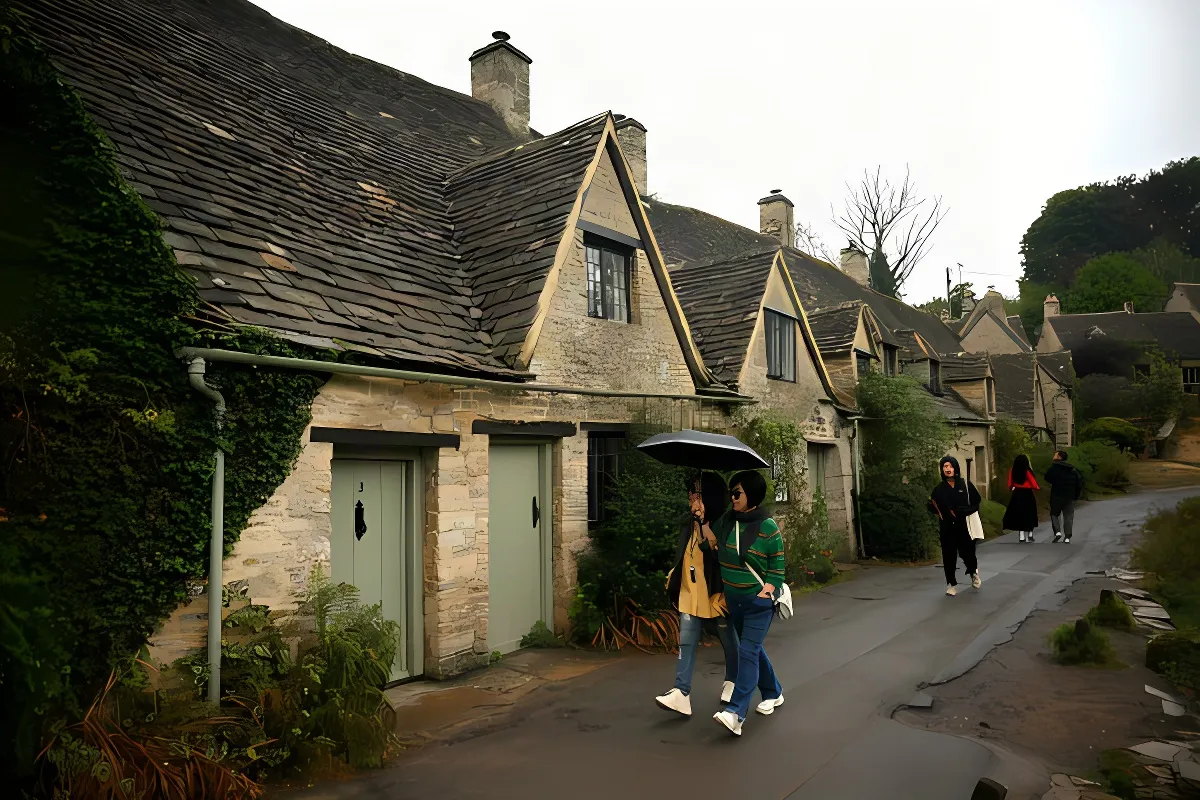
Bibury, a village of 600 people in Gloucestershire, has become a must-stop for Japanese fans of Kin-iro Mosaic (黄金拼图). The series, partly set in this corner of the Cotswolds, draws so many visitors that on peak-season weekends the village gets around 20,000 people, according to residents' estimates.
The phenomenon isn't new, but the Epoch Times report puts numbers on what locals have been seeing for a while: caravans of tourists with cameras, looking for the same spots that appear in the anime. And not all of them come from Japan, though the 'seichi junrei' —the pilgrimage to the real-life locations of a work— is the main driver.
What Bibury has to do with Kin-iro Mosaic
Kin-iro Mosaic is a manga by Yui Hara that ran in Manga Time Kirara Max magazine from 2010 to 2020, with 11 volumes and 148 chapters. The story follows a group of Japanese and British high school girls, and much of its setting draws directly from Bibury.
The anime arrived in 2013, directed by Motoki Tanaka, and a film premiered in August 2021. The connection to the village is so direct that the studio behind the adaptation is named Bibury Animation Studios. Locals found out later: the studio they had been living alongside in fiction was named after their own home.
In June 2019, a Japanese travel blogger documented his visit to Bibury to locate the series' settings. He found Arlington Row, the row of 14th-century weavers' cottages the main characters cross frequently, plus a bridge, an ice cream shop by the bus stop, a bench, and the red telephone booth that appears in the ending.
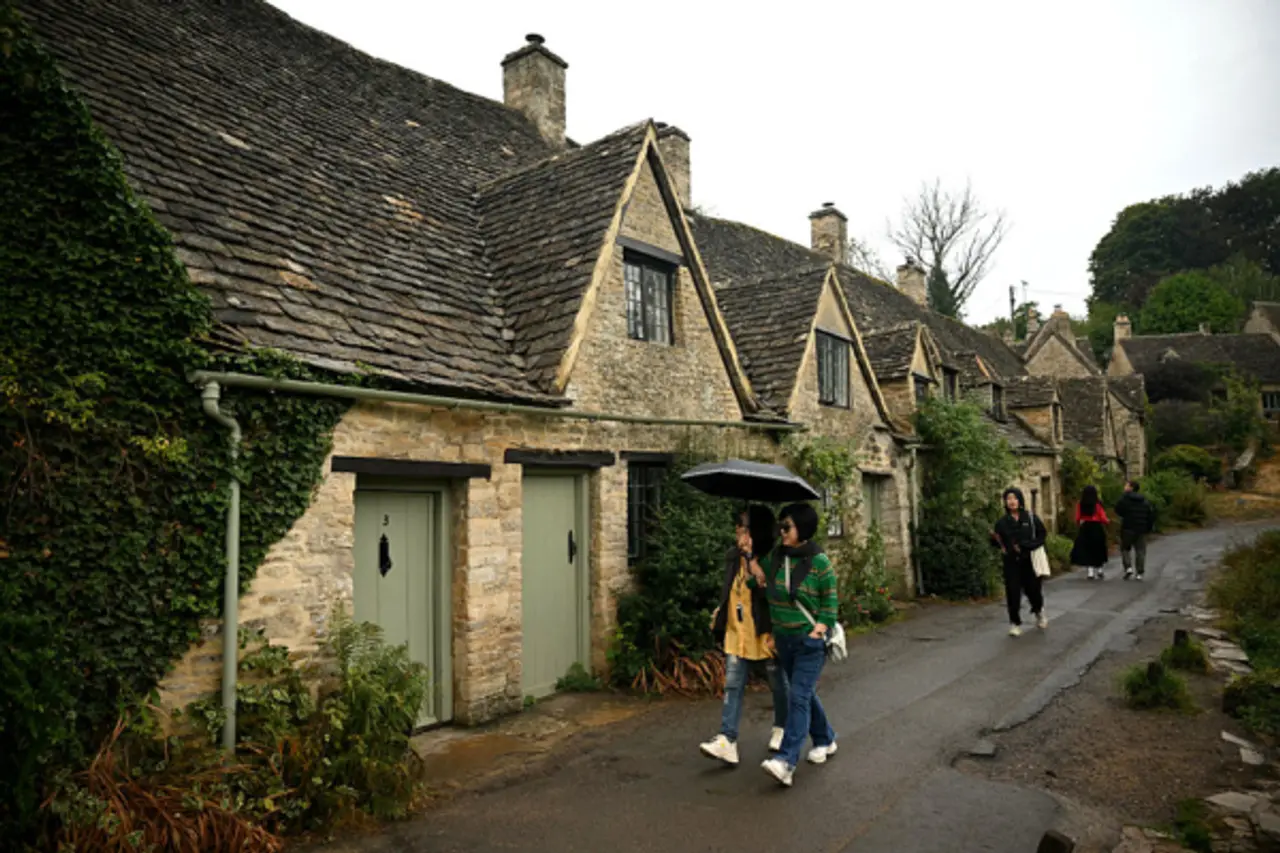 A group of people walks along a street in a British village with stone houses.
A postcard village with the problems of mass tourism
Bibury was not unknown before the anime. Forbes included it among the most beautiful villages in the world, and poet William Morris called it "the most beautiful village in England." Arlington Row, with its honey-toned limestone, steep roofs, and moss-covered tiles, sums up that storybook aesthetic that attracts visitors from all over.
The River Coln runs through the village, with swans and ducks on the bank, and the Rack Isle wetland adds a touch of nature that completes the postcard. It's easy to see why a slice-of-life anime chose this place as its setting.
But fame has a cost. Residents complain about blocked roads, tourists entering private gardens, and people photographing houses from too close. The narrow streets and historic buildings aren't designed to absorb 20,000 people in a weekend.
Bibury's case is similar to other places anime has put on the map: seichi junrei fills small local economies with life, but it also strains coexistence with those who live there year-round. In this English village, the difference is that the series didn't just use it as a setting: it gave the studio that animated it its name.
Would you like to visit Bibury or is it already on your seichi junrei list? Tell us in the comments.
Sources
Titles mentioned


0 comments
Sign in to leave a comment
Tell everyone what you think about this story.
No comments yet. Be the first.
Keep reading

Veteran One Piece fans slam Eiichiro Oda over the pacing of the Elbaf arc
Juan Castillo · 17 October 2026

Umamusume and Retired Horses: The Case of Nice Nature
Staff Donotaku · 19 May 2026

Being a streamer is now the number one dream of Japanese children, but it disappears in high school
Staff Donotaku · 1 April 2026