Legends of Chinese Folklore premieres November 29
The series blends fantasy with real Jiangsu crafts and uses AI in its animation process.
 Juan Castillo Published:
Chinese television premieres Legends of Chinese Folklore: Season One on November 29 at 19:05 on the Youman Cartoon channel. The series, focused on spreading the country's cultural heritage, is part of the key animation projects of the National Radio and Television Administration and the Jiangsu provincial office.
The production is handled by the Jiangsu provincial network and the company Xingfu Lanhai, with the collaboration of a children's art creation base in Nantong. The proposal avoids the classic documentary format and bets on a fantasy plot: a celestial official descends to the human world with the mission of rewriting the Record of Chinese Customs.
That narrative thread allows traditions to be presented as characters you can talk to and interact with. The series uses time travel, anthropomorphic creatures, and exploration trials so that intangible heritage stops being something static and becomes stories with memory, emotions, and conflicts. The stated goal is for young audiences to live an immersive experience and connect with artisanal work.
Five Jiangsu crafts in the first season
The episodes focus on five representative elements of the province: Nanjing cloud brocade, Huishan clay figurines, the three knives of Yangzhou, Han dynasty stone reliefs in Xuzhou, and Tongzhou kites. Each serves as a gateway to its history and to the people who have kept it alive.
The series makes an effort to maintain historical rigor amid the fantasy. Ming dynasty court clothing, Han era ritual instruments, the urban atmosphere of Yangzhou in the late Tang dynasty, or the clothing of Nantong fishermen during the Qing are documented with historical sources. The idea is simple: history can fly, but the details stay on the ground.
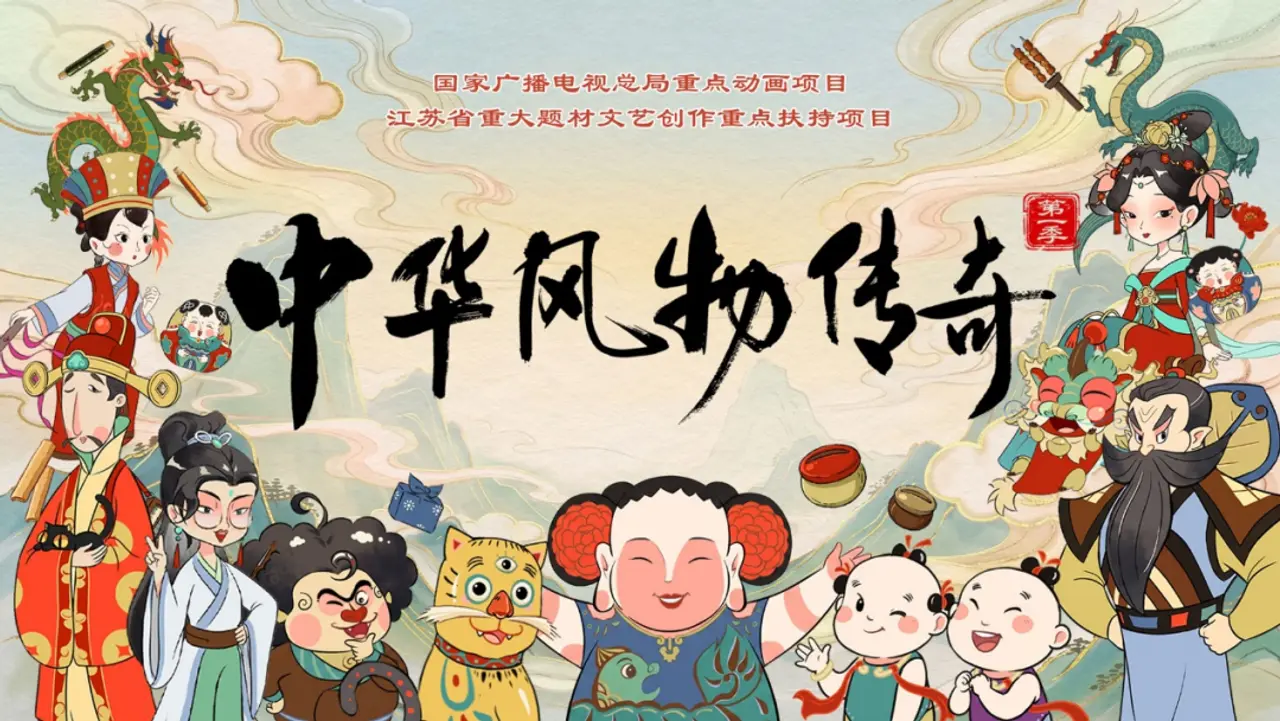 Colorful illustration with characters and elements of Chinese culture.
The visual side draws from traditional Chinese painting, with a classic color palette and characters that take traits from opera. Jiangsu's heritage elements are also integrated into the settings and the music, which reinforces the local identity without giving up a recognizable aesthetic.
AI in production, with clear limits
One of the most striking details is the use of artificial intelligence in the animation process. The team uses it to optimize the workflow and explore an industrial path that combines automatic generation with traditional hand drawing. The intention, according to the production, is to gain efficiency without losing creative control or the Chinese visual identity.
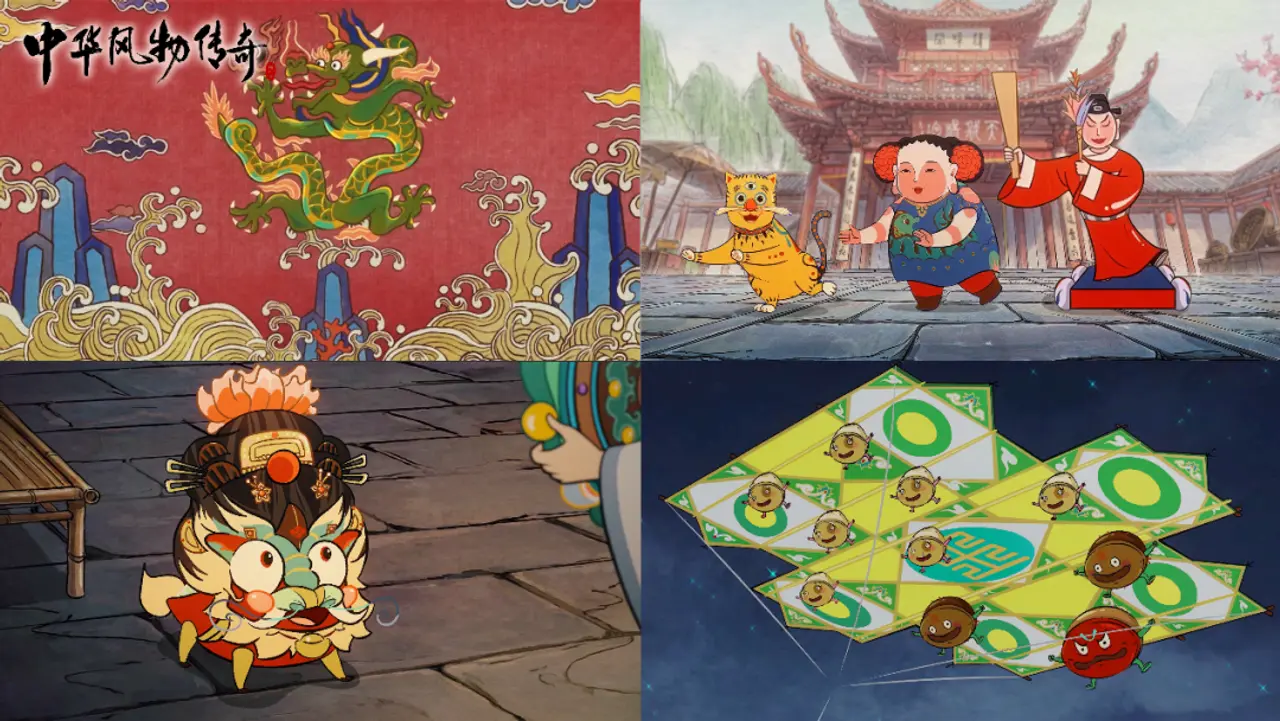 Collection of animated scenes representing elements of Chinese folklore.
The series presents itself as an attempt to modernize the transmission of cultural heritage without turning it into an animated museum. It remains to be seen whether the balance between fantasy and historical rigor works on screen, and whether young Chinese audiences connect with a proposal that bets on cultural identity in a market increasingly saturated with productions.
What do you think about the use of AI in a series that seeks to preserve cultural identity? Tell us in the comments.
Sources
0 comments
Sign in to leave a comment
Tell everyone what you think about this story.
No comments yet. Be the first.