Action Manga Revives the Wuxia Tradition That Cinema Left Behind
The box office success of 'Blades of the Guardians' boosts comic sales and reignites the debate over the legacy of martial arts stories.
 Mariana García 10 October 2026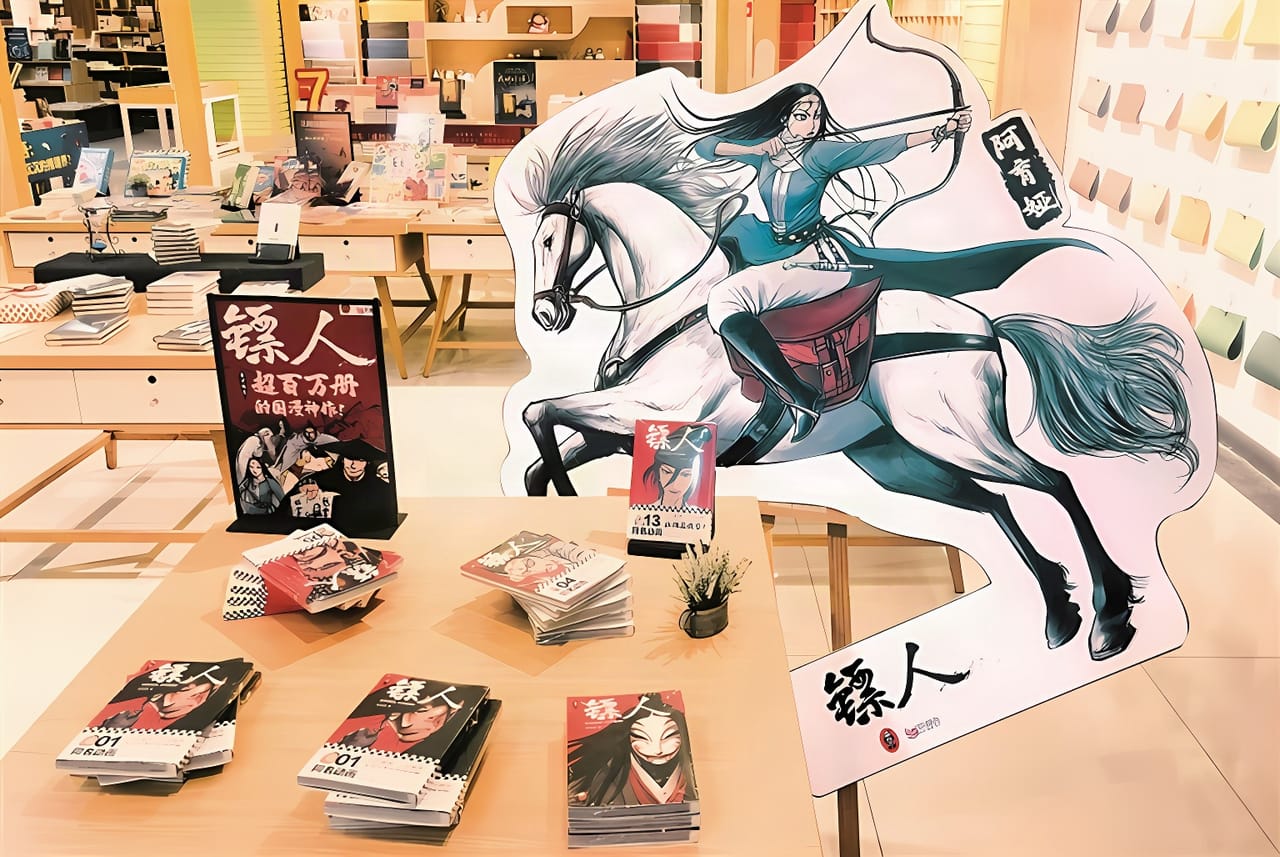
The start of 2026 left an image we love to see at DonOtaku: a film adaptation driving sales of the source material. The live-action movie of Blades of the Guardians (Biao Ren) became a box office hit in China, and its manga counterpart climbed back onto the bestseller lists. The news isn't just commercial: it reopens a conversation that those of us who follow the martial arts genre have been having for years.
For decades, stories of wandering swordsmen, sects, and the jianghu dominated Chinese popular culture. The novels of Jin Yong, Gu Long, and Liang Yusheng filled bookstores and screens. But for some time now, pessimism has set in among critics: specialized magazines shut down, publishers stopped betting on new authors, and on digital platforms the wuxia label was pushed aside in favor of xianxia, urban fantasy, or historical romance.
The question posed by China Youth Daily is direct: did martial arts storytelling really die, or did it simply change its skin? And the answer they outline is far more interesting than any nostalgic lament.
Wuxia Didn't Disappear: It Transformed into Fantasy
The analysis starts with a distinction little known outside China. Scholar Tang Zhesheng divides martial arts fiction into two branches: the technical, focused on realistic combat and verifiable martial arts, and the fantastical, which from Huanzhulouzhu to Huang Yi blends swords with mythology, immortality, and time travel.
The first branch reached its peak with Jin Yong. The second, however, kept evolving. When Jin Yong's novels conquered the mainland Chinese market in the 1980s, Hong Kong was already forging its successor: Tsui Hark's cinema with Zu: Warriors from the Magic Mountain (1983) and the manhua Fung Wan, by Ma Wing-shing and Dan Qing, published between 1989 and 2014. Both works absorbed influences from Japanese comics and Western cinema to update the genre's codes.
That path was consolidated by Huang Yi, the author who in 1988 received a devastating piece of advice from his editor: "nobody buys wuxia unless it's by Jin Yong or Gu Long." His response was to create hybrids like Broken Void or A Step into the Past, where historical adventure, science fiction, and spiritual cultivation coexist without asking permission. From there emerged the fertile ground now occupied by xianxia and xuanhuan web novels.
Power Rises, the Hero Comes Down to Earth
The article proposes an elegant formula to understand the shift: the "wu" (the martial) rose while the "xia" (the hero) descended. Power systems went from "low wu" to "high wu," with cultivation scales, divine realms, and planetary battles. But the protagonists are no longer flawless knights: they are ordinary people trying to survive, progress, and protect their own.
The most cited example is A Soldier's Story, by Yang Pan, a fanfic published in 2000 based on a chapter of The Return of the Condor Heroes. It tells the life of an anonymous guard who admires the great heroes, does his duty, and ends up abandoned by those he idolized. Empathy shifts from the legendary swordsman to the pedestrian cleaning the city wall.
That movement explains why so many current protagonists are named "Supreme" or "Immortal Emperor" and yet feel relatable. They don't seek glory: they seek dignity. On their path to ascension, they defend clans, cities, or entire civilizations. The "great hero" narrative didn't break; it was told from below.
What Manga and Anime Can Learn
The piece closes with two lessons that Jin Yong's work leaves for today's creators, and that apply equally to manga, manhua, and fantasy anime. The first: violence without emotion cannot sustain a story. Level systems, statistics, and spectacular battles only work if there are real bonds between characters behind them. Jin Yong also made continuity errors in his serializations, but no one noticed because the reader was captivated by the loyalty, sacrifice, and love among his heroes.
The second: extreme individualism empties the genre. If the protagonist's only goal is to become stronger, the story loses its social anchor. The works that endure —and here we think of so many action shōnen we love— are those that balance personal growth with a collective cause.
The case of Blades of the Guardians proves that audiences are still hungry for swords, honor, and dusty roads. It's just that now the heroes can be cynical mercenaries, cursed warriors, or failed cultivators. The martial arts tradition isn't in a museum: it's mutating, and it's up to us to keep pace.
0 comments
Sign in to leave a comment
Tell everyone what you think about this story.
No comments yet. Be the first.
Keep reading
You Are a Four Leaf Clover ends in October and its anime is already in the works
Mariana García · 8 October 2026

One Piece 1195: Sanji vs. Killingham chapter leaks from Elbaph
Mariana García · 8 October 2026
Seven Seas Licenses Manga, Novels, and Audiobooks Through 2027
Mariana García · 8 October 2026