Chinese Anime Looks to Its Traditions: How New Creators Are Using Them
A forum in Beijing brought together students and professors to discuss how to turn legends, painting, and calligraphy into contemporary animation.
 Mariana García 6 October 2026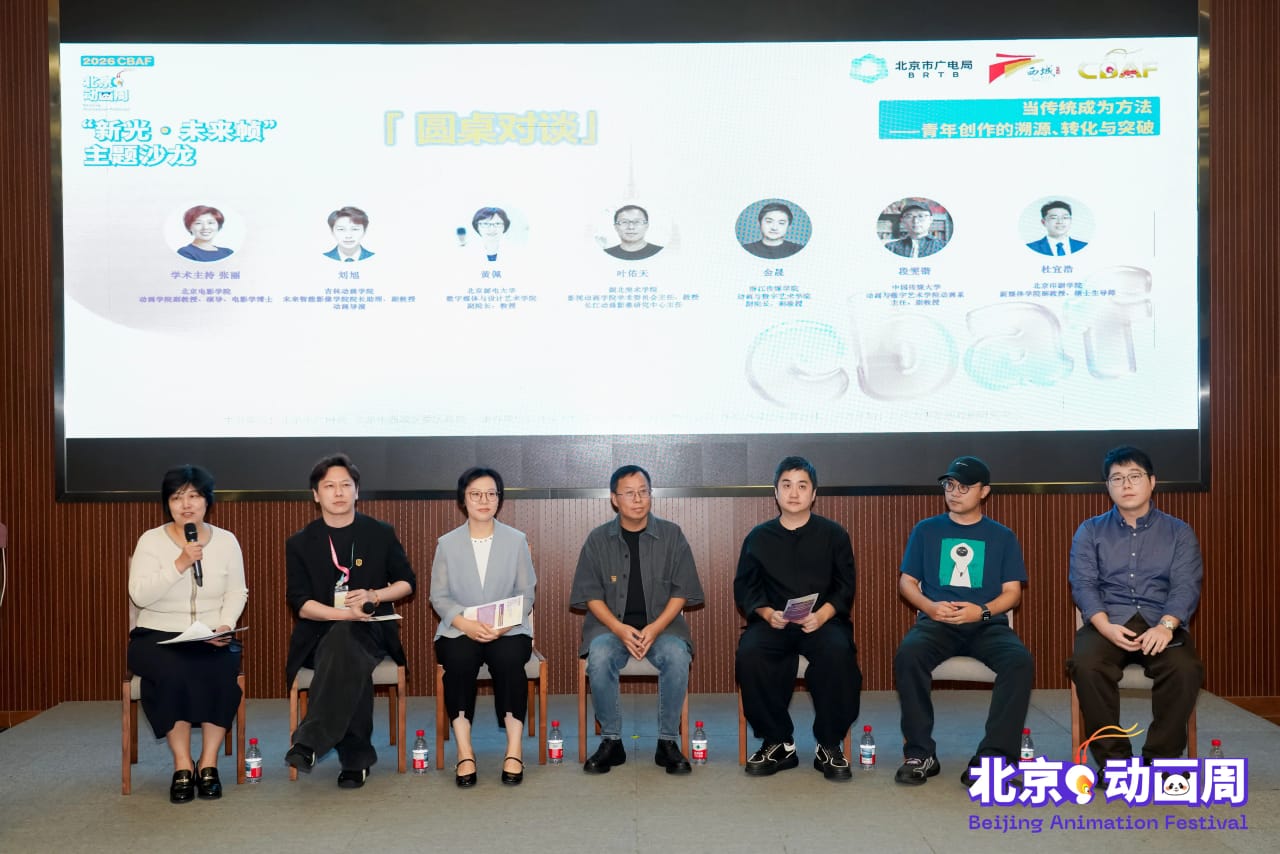
Chinese animation continues to search for its own voice and is increasingly looking to its history. As part of the 2026 Beijing Animation Week, the forum "When Tradition Becomes Method: Tracing, Transformation, and Advancement in Youth Creation" brought together young creators, researchers, and professors from several universities in Beijing.
The event was held at the Beijing Exhibition Center and showcased seven projects made by students and recent graduates. There was a bit of everything: 2D and 3D animation, AI manju (short series made with artificial intelligence), and even a virtual reality experience for two people.
One of the most talked-about projects was Hanzi Yanbian: Jiwei, by Tang Yuchan, a graduate of the Beijing University of Posts and Telecommunications. The work takes four Chinese characters—"food," "meat," "roast," and "sauce"—and turns the evolution of their written forms into animation. For Tang, the shape of a character already contains visual information: in "roast," for example, the symbols for meat and fire are combined. That change, from oracle bone script to modern writing, becomes narrative.
Two shorts based on the same Tang dynasty story also drew attention. Fish Transformation and Fish Journey adapt the tale of Xue Wei, a magistrate who dreams he turns into a carp, but each takes it in a different direction. The first keeps the satire about identity and human relationships, with a 3D style that tries to imitate Chinese ink painting. The second focuses on the character's inner balance and draws references from the painter Bada Shanren, with more wide shots and fewer close-ups.
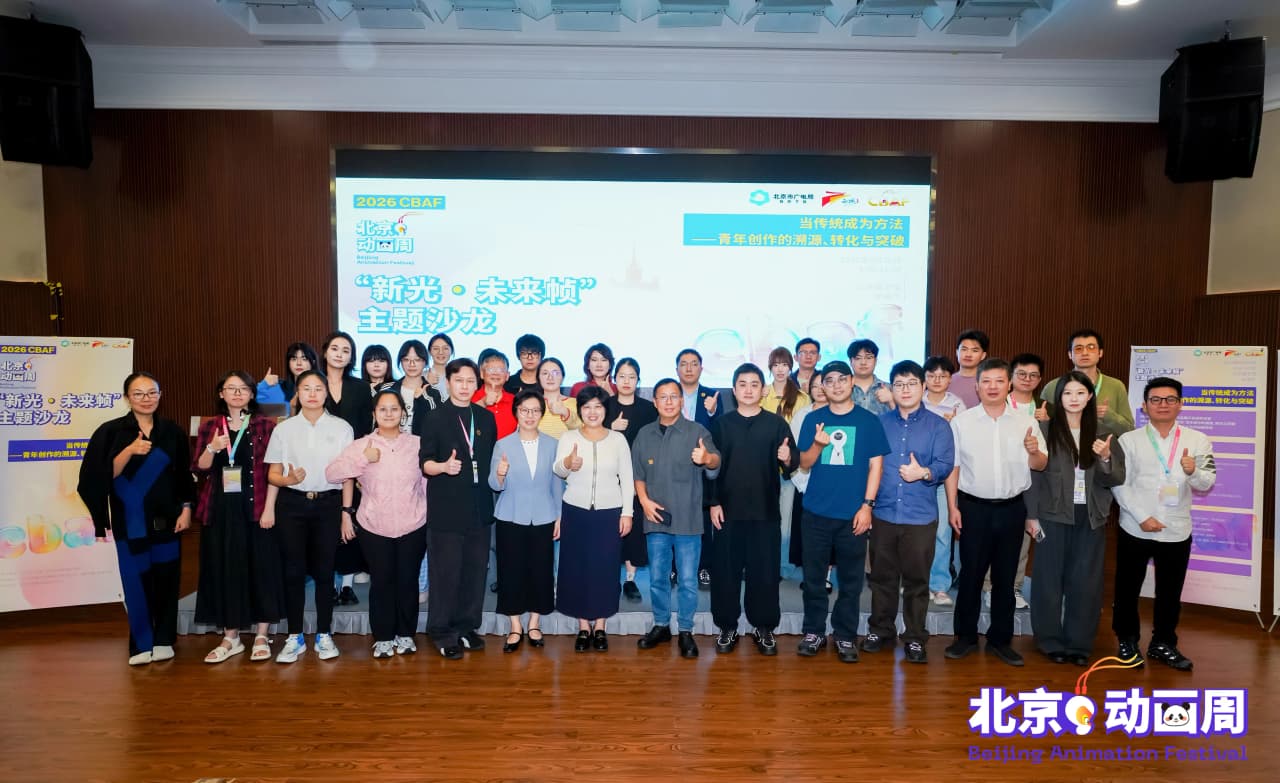 Group of participants at the youth creation forum held in Beijing.
From Calligraphy to VR: One Shared Question
Another project, Four Directions Animal City, uses the traditional concept of the four cardinal directions to build a world with animals from Changbai Mountain, designed for preschool children. And Men, from the Communication University of China, is a two-player virtual reality piece inspired by the neighborly help found in Beijing's old hutongs.
In the roundtable discussion that followed, professors emphasized one idea: using tradition is not about copying patterns or decorating with ancient motifs. Ye Youtian, from Hubei University, put it clearly: it's not about imitating a ready-made national style, but about connecting the emotion behind a painting or a story with contemporary life.
Duan Wenkai, from the Communication University of China, cited Three Monks, a classic of Chinese animation, as an example. What matters is not what ink or texture it used, but why its creators decided to omit spaces and change directions to tell the story better. That logic, more than the aesthetics, is what can be learned today.
Artificial Intelligence Enters the Debate
The forum also addressed the role of AI in animation. Jin Sheng, from Zhejiang University, raised a real problem: when a machine generates polished images in seconds, what value does manual work have? And he went further: what academia considers good does not always match what audiences see on platforms.
Zhang Jinyi, from Hubei University, presented Floating, a short that mixes AI and hand-drawn animation. At the end of the work, the creator turns off the AI and completes the final scenes frame by frame. The character regains control of his body at the same moment the animator picks up the pencil again.
The closing came from Liu Xu, from Jilin University, with a simple wish: that young people keep their curiosity and drive to create. Because, as was repeated throughout the day, tradition is not a dead archive. It is a working method still waiting to be explored.
0 comments
Sign in to leave a comment
Tell everyone what you think about this story.
No comments yet. Be the first.