Zheng Yuanjie, 71, uses AI to animate his stories and publishes them for free
The Chinese author stopped writing two years ago and now produces a short every three days with AI tools, aiming to adapt his entire body of work.
 Juan Castillo Published:
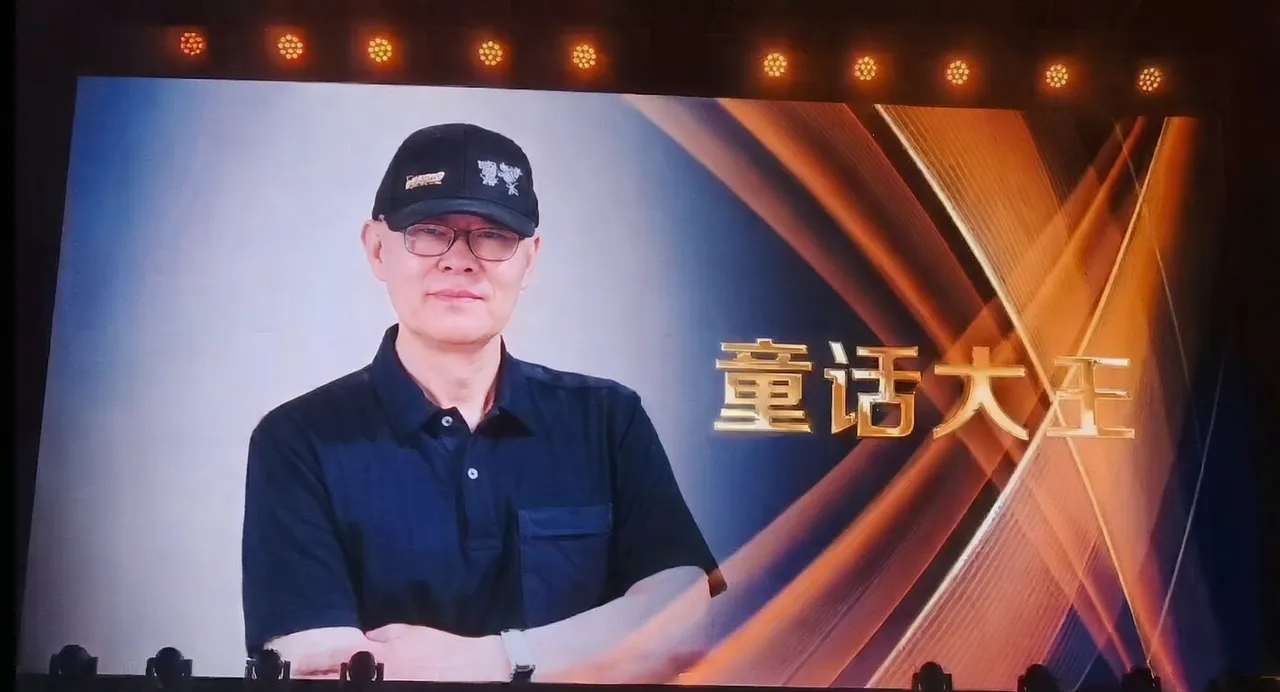
Zheng Yuanjie, the Chinese children's literature writer, announced on November 17 that he began using artificial intelligence to turn his stories into animations. At 71, the author of Shuke and Beita had gone nearly two years without publishing, and now he uploads the shorts for free to Douyin, the Chinese version of TikTok, on the account "Zheng Yuanjie's Story World."
On his Weibo account, Zheng wrote that he is a "complete ignoramus" when it comes to animation, but that AI allowed him to finish his first shorts. A few days later he shared The Snake That Doesn't Step on Manhole Covers, a piece made by himself alone with AI tools.
The production pace is striking for someone who never worked in animation. According to Hongxing News, Zheng gets up at 4:30 in the morning and finishes a short every three days, on average.
From classic stories to author-made animation
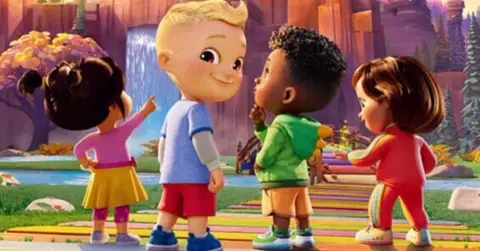
The first works adapt tales from Zheng Yuanjie's Twelve Zodiac Signs and the Good Habits Stories series. Among the titles already available are King Pig Takes a Photo, King Rat Steals Time, and The Black Hen and the White Hen. Each episode runs between four and five minutes.
Zheng is no novice at creating characters. He has been publishing children's stories for 50 years, and his best-known characters, like Pipilu, Luxixi, Shuke, and Beita, have a huge readership in China. What he never had was the technical ability to bring those stories to the screen.
He explained it himself on Weibo: before, he could imagine the scenes of his stories, but he couldn't show them in full. If he commissioned an animated adaptation from a studio, the result could drift away from what he wanted to tell. AI gives him the chance to do it himself.
A shift in how animation is produced
The news comes at a time when AI video production is changing the rules for individual creators. Until recently, an author with a story and defined characters needed a team of artists, animators, and editors to produce an audiovisual piece. AI tools compress part of that process: with text prompts, image generation, and video, a single person can do what previously required several professionals.
That doesn't mean AI replaces animators. Keeping characters consistent, achieving natural movement, making the camera work, and getting the story's pacing right still depends on human decisions. But the production scheme is no longer the same.
Zheng is clear about it: his advantage isn't technique, it's the material. He has half a century of stories and characters people already know. AI gives him what he was missing: the ability to animate.
The plan: his entire body of work in animation
The author doesn't plan to stop at shorts. In his posts he said he wants to adapt the stories he has written over 50 years, and that afterward he will try animated feature films with AI, even movies for theaters.
His strategy is to start small: short stories, constant production, and free publication on Douyin. The audience response on that platform will help him gauge what works before jumping to longer formats.
For a creator with such a large catalog, this changes the value of his work. He no longer depends on a big production company approving a million-dollar adaptation. He can reuse his old stories, give them a second life, and keep creative control.
He isn't the only one trying it. In Germany, writer Anna-Mariia Kostiuk and her husband, illustrator Vitalii Kostiuk, adapted their children's book Sonja und die Mondfee into an animated short with AI and presented it in March at the World AI Film Festival. Earlier, in 2023, Brazilian novelist PJ Caldas used generative AI to create an animated trailer for his novel The Girl from Wudang.
They're different cases, but they point to the same place: visualizing a literary work no longer depends only on the traditional audiovisual production system. The author can start from his own stories and characters, and participate directly in creating the video.
The rights problem when AI enters the picture
The rise of AI also brought a wave of fan-made videos using other people's characters. From Harry Potter to other franchises, social media is full of character redesigns, alternate stories, and fake trailers made with AI. The problem appears when those videos stop being a game among fans and start making money: using characters, plots, or material from a work without permission is still a copyright violation, even if the images are generated with AI.
Zheng avoids that conflict because he works with his own material. He is the original author of the stories and the characters, so he doesn't need to ask anyone for authorization. His creative autonomy is total.
In his message on November 17, Zheng was direct about his stance: "With the arrival of the AI technology wave, I believe that free enjoyment of cultural and spiritual works is an unstoppable historical trend."
That said, lowering the production barrier doesn't make developing an intellectual property simple. AI generates images, but it doesn't solve by itself the long-term maintenance of characters, the adaptation of stories, audience building, or content operations. From a five-minute short to an animated feature there is still a considerable distance.
Zheng can animate with AI, but the decisions about what to tell and how to tell it are still his. And the value of his work will depend as much on his ability to operate the content as on his ability to produce it.
Sources
0 comments
Sign in to leave a comment
Tell everyone what you think about this story.
No comments yet. Be the first.