The team behind “那兔” used AI to shorten production of the Long March arc
Producer Wang Lei details how the tool sped up prototypes and forced stronger error review.
 Javier Fernández Published:
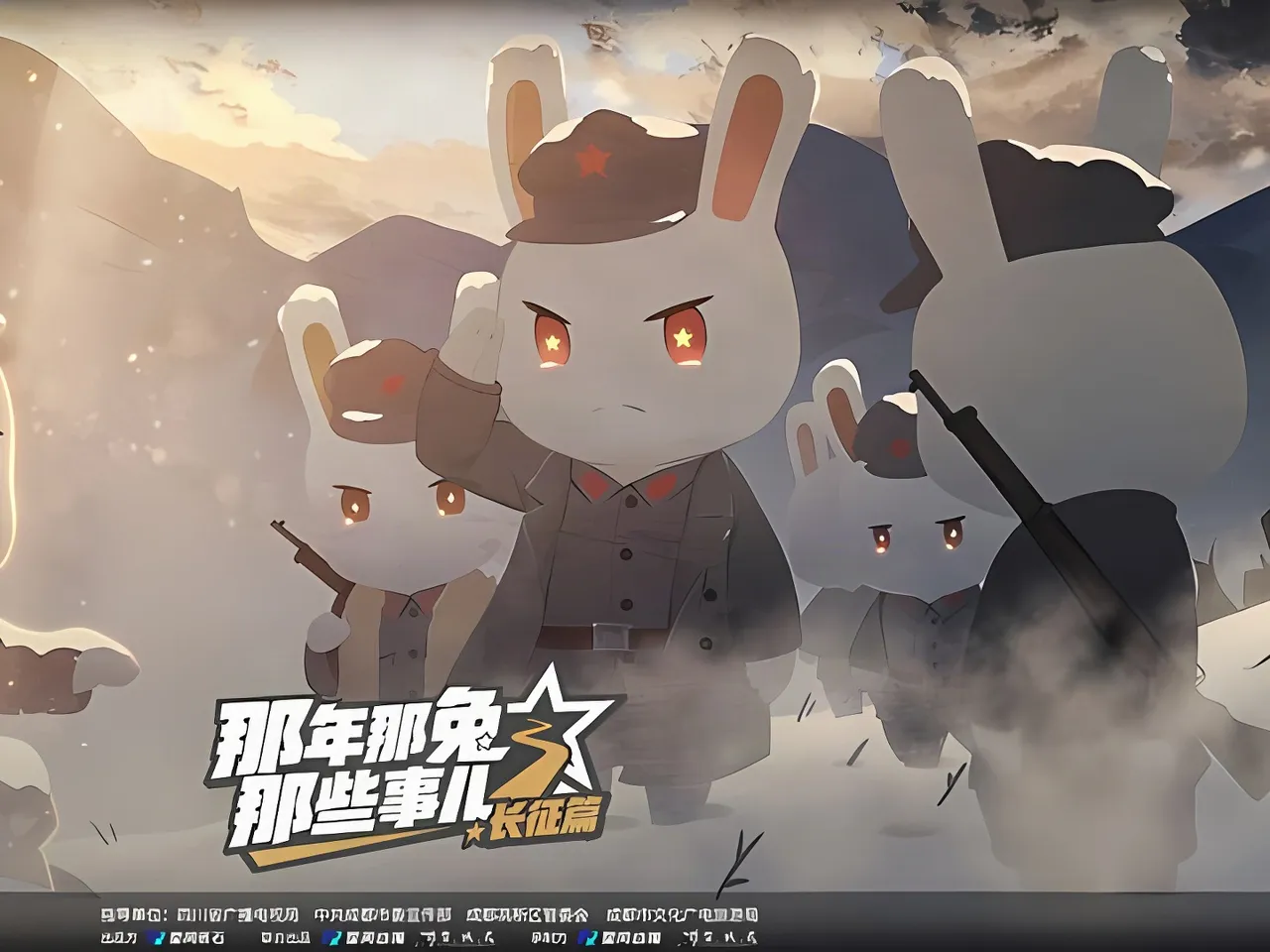
The producer and general planner of 那年那兔那些事儿长征篇, Wang Lei, explained in an interview with Beijing News how artificial intelligence reduced the production time of the series' new arc. According to his statements, the tool made it possible to go from one month to one day in the creation of visual samples, although it also increased the workload in quality control.
The Long March arc premiered on October 27 on Tencent Video and other platforms. The story is set between the 1929 Gutian Conference and the meeting of the three main forces of the Red Army in 1936. The plot follows ordinary characters: a recruit, a communications operator, an underground liaison and a lost soldier.
Wang Lei, president of Chengdu Xingyue Chenshi, explained that the project began early this year after talks with the National Radio and Television Administration and its delegation in Sichuan. The idea was to bring revolutionary history closer to a young audience through the language of anime.
The script was handled by Lin Chao, creator of the franchise and director of the project. The text was finished in June, after receiving detailed observations from the supervisory bodies. That schedule left little room for animation, which was concentrated in about three months.
From a month to a day in idea validation
Wang Lei described the most visible change that AI introduced in the workflow. Before, turning a script into a visual sample could take a month. With the new tools, the team sees a prototype in a day and decides whether the idea works or needs adjustments.
The producer insisted that the process does not consist of handing the script to AI and waiting for a finished animation. Character design, storyboard, art direction and framing remain human work. Technology changes, he said, but quality depends on the script, the design and the creator's judgment.
The speed of generation also brought a new problem. To maintain the visual coherence of the characters and the style, the team had to generate, filter and verify more material than usual. Errors multiplied compared to the traditional flow, so the time saved was invested in review and correction.
Historical details under a simplified stroke
The production took care of specific elements of the era. Wang Lei gave uniforms as an example: the production differences between the Soviet zones meant that even the same blue had different shades. The team reflected those variations and avoided making the patches on the clothes uniform.
Objects such as telegraphs and generators were simplified to adapt to the visual style, but without losing their recognizable silhouette. "If this is not restored, you lose the sense of reality," Wang Lei said.
The arc includes recreations of museum display cases, some with the same order and arrangement of coins as in the real exhibitions. The intention is for children to recognize those objects if they visit a museum and stop in front of them.
"They may say: 'it's just like what I saw in the animation,' and that excites them and sparks their interest."
The team screened the episodes in communities, nurseries and elementary schools. Wang Lei said that some preschool children watched the twelve chapters in a row, about sixty minutes, and that some little ones cried during the screening.
The IP above the tool
Wang Lei also talked about the studio's future. The AI experience left reusable assets, such as character concepts, but he warned that the experience with prompts will not always be transferable because the technology changes fast.
The team wants to explore collaboration with individual creators and small studios, a model that Wang Lei compared to the network of hundreds of suppliers that worked on Ne Zha. The idea of coordinating hundreds of one-person companies poses, according to him, a challenge for the current production system.
About the industry, his take is direct: when generating images becomes increasingly cheaper, the important thing will be intellectual property. The question will stop being who can animate and will become why someone would want to watch and follow a specific story.
AI also reopens the debate on rights. Wang Lei confirmed that the team is negotiating authorization issues with technology platforms. Regarding derivative works of the franchise, he maintains an open stance as long as they respect legality and have healthy content.
The franchise film still has no date. Lin Chao already has the script finished, but the studio is still discussing which technique to use and how to combine AI with manual work. The priority, Wang Lei insisted, is to polish the text before deciding anything else.
What do you think about the use of AI in a production with so much historical weight? Tell us in the comments.
Sources
Titles mentioned
0 comments
Sign in to leave a comment
Tell everyone what you think about this story.
No comments yet. Be the first.