China builds a Kamakura imitation with the Slam Dunk railway crossing in Lianyungang
The new 'Liancang Beach' replicates Kamakurakōkō-mae Station with a train, crossing barriers, and vending machines as Chinese tourism to Japan drops 56.7%.
 Javier Fernández 3 October 2026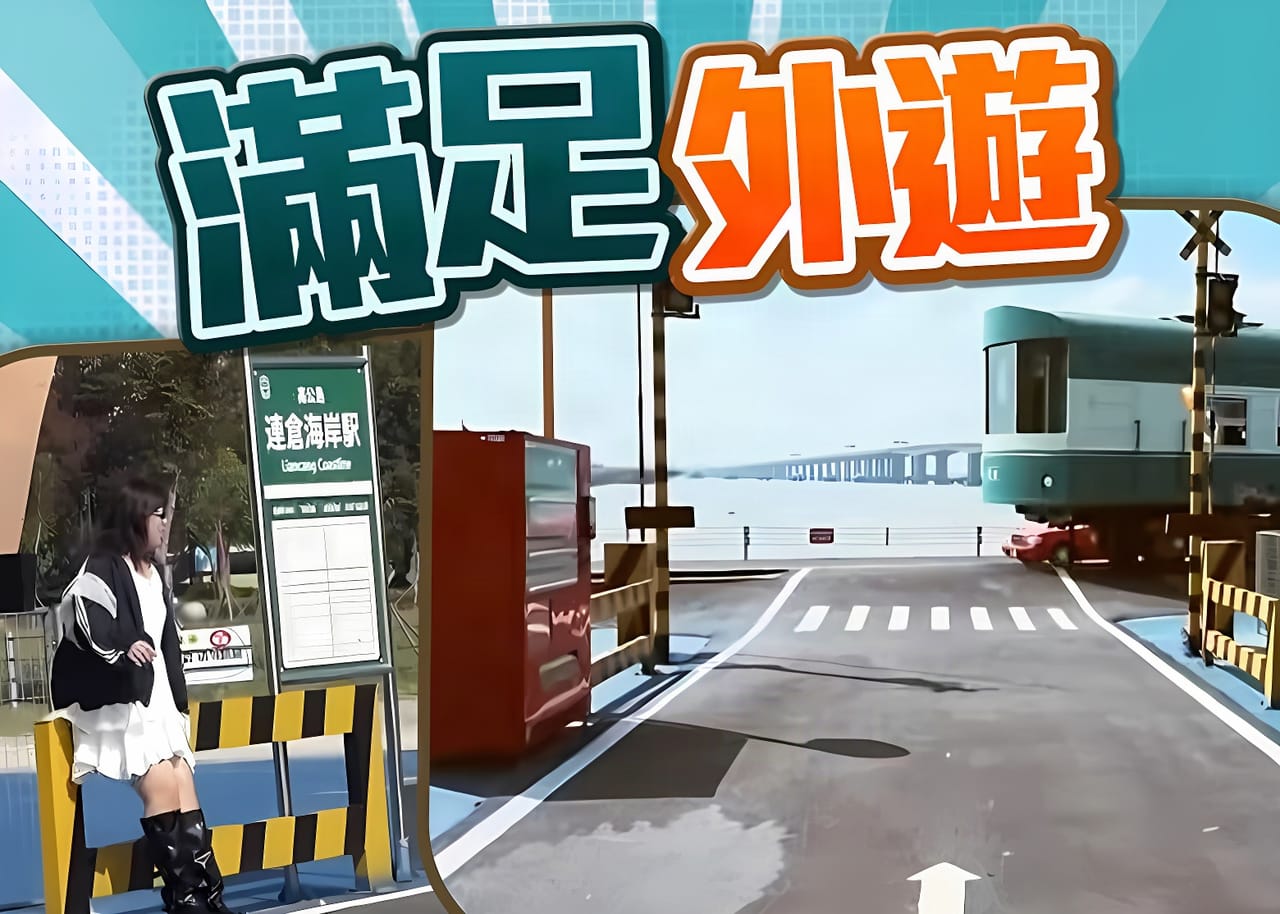
The drop in Chinese tourism to Japan has an unexpected reflection on the coast of Jiangsu Province. The Yangshan Island scenic park in Lianyungang opened a corner in August that recreates the setting of the Kamakurakōkō-mae railway crossing, the spot that Slam Dunk turned into a pilgrimage site for generations of fans.
The space is called Liancang Beach and makes no secret of its inspiration. A train car rests on an open area, right next to a railway crossing, complete with a basketball hoop, a convex mirror, and vending machines like those found on Japanese streets. The sign by the barriers welcomes visitors in Japanese: "Irasshaimase." Inside the train car, a café called Liancang Coffee operates—a phonetic play on Kamakura.
The news was reported on Friday by Hong Kong outlet on.cc East Net, which describes the place as an imitation of "Kamakura" on the Kanagawa coast. It is not an exact replica, but a staged setting that combines recognizable elements of the Japanese railway landscape with the local name of the Chinese port city.
The original spot, Kamakurakōkō-mae Station, owes its fame to a sequence from the anime adaptation of Slam Dunk, the basketball manga by Takehiko Inoue published in Weekly Shōnen Jump between 1990 and 1996. In the series' opening scene, the heroine greets Hanamichi Sakuragi by the tracks of the Enoshima Electric Railway, with Sagami Bay in the background. Since then, the crossing has attracted thousands of visitors, especially from China and South Korea, who pose for photos in Shohoku High School uniforms.
The Lianyungang version arrives amid a collapse in Chinese tourism to Japan. According to data cited by the outlet, between January and August of this year, the number of Chinese travelers entering Japan fell 56.7% compared to the same period last year. Air routes between the two countries have been reduced, and since July, the Japanese visa fee for Chinese citizens has increased fivefold.
The cooling of bilateral relations has pushed many travelers to seek substitutes within China. Yangshan Island is not the only case: the article mentions a growing trend of building replicas of Japanese landmarks on Chinese soil, though it does not detail other examples.
A Tuesday with a line at Liancang Beach
The new tourist spot is working. Despite being a weekday, the site had lines of visitors ready to take photos next to the train. One tourist told the outlet that she drove an hour just to see it: "Of course I want to go to Japan. If I didn't want to go to Japan, who would come all the way here?" Another visitor valued the foreign atmosphere of the place as its main attraction.
On Chinese social media, the spot has been repeatedly tagged as "little Kamakura" and has generated a high volume of debate. The formula is well known: reproduce the aesthetic of the original destination without leaving the country, at local prices and with no visa required.
"Of course I want to go to Japan. If I didn't want to go to Japan, who would come all the way here?"
The contrast with the original is clear. Kamakura is a coastal city with more than 170,000 residents, historic temples, and a century-old railway network. Liancang Beach is a set designed for photos, though its immediate success shows that demand for Japanese iconography remains intact among the Chinese public.
The report does not clarify whether the project has any license or authorization from the rights holders of Slam Dunk. It also does not mention reactions from Toei Animation, the studio that produced the anime, or from Inoue. The name of the place, however, avoids directly using the franchise's brand and relies on the phonetic similarity to Kamakura.
The economic data completes the picture. Hotels in Osaka and other Japanese cities have noticed the absence of Chinese customers, replaced in part by European and American tourists. As long as access to Japan remains expensive, these replicas have commercial potential in the Chinese domestic market.
It remains to be seen whether Liancang Beach will establish itself as a destination or fade once flights and visas return to normal. For now, the Lianyungang railway crossing already has what it was looking for: a line on a Tuesday afternoon. What do you think of this type of replica of iconic anime locations? Tell us in the comments.
Titles mentioned


0 comments
Sign in to leave a comment
Tell everyone what you think about this story.
No comments yet. Be the first.
Keep reading

Jingqiu Autumn Book Fair Fills with Science and Music Thanks to Mi Wu and Deer First Sen
Mariana García · 3 October 2026

Biblia Koshodō no Jiken Techō anime arrives in April 2027 with PV and 4 new voices
Mariana García · 3 October 2026

Magical★Explorer soundtrack arrives November 25 with a towel bonus
Laura Martínez · 3 October 2026