Anime
40 of 30,598 titles · Page 506
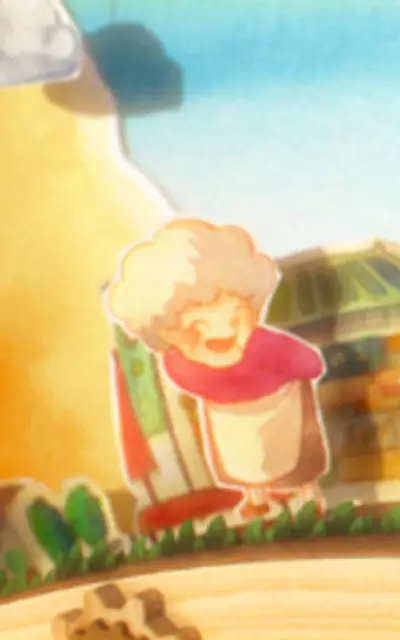
Obaa no Omamori
A young girl receives a small omamori, a protective charm, from her beloved grandmother. The charm is meant to keep her safe and serves as a tangible symbol of their deep bond. As the girl grows up, she carries the omamori with her, finding comfort in its presence during moments of change and uncertainty. The girl faces the challenges of growing up, including moving to a new town and struggling with feelings of loneliness. The omamori becomes a source of strength, reminding her of her grandmother's love and the lessons she learned. Through the charm, she discovers the power of memories and the importance of holding onto the people who shape us, even when they are far away.
Obaa no Omamori
Special · 1 ep. · 2016

Gachou no Oba-san
A music video accompanies the song "Gachou no Oba-san" by the Japanese vocal group Dark Ducks. The piece was created for broadcast on NHK's program Minna no Uta, which showcases various musical works. The video features animated visuals that complement the song's cheerful melody and lyrics about a goose aunt. The video is now considered lost media, with no known surviving copies available to the public. Despite efforts by fans and researchers to locate any existing recordings, the original footage has not been found in archives or private collections. Its disappearance adds to the mystery surrounding early Japanese animated music videos, making it a notable example of lost media from the la
Gachou no Oba-san
Special · 1 ep. · 1967

Deka Chibi Noppo
A music video for the song "Deka Chibi Noppo" by Mary Suwa and the NHK Tokyo Jidou Gasshoudan airs on NHK's Minna no Uta program. The short features simple animated visuals that accompany the cheerful and playful tune, likely depicting characters or scenes inspired by the song's title, which translates to "Big, Small, Tall." It is broadcast as part of a regular segment showcasing musical pieces for children. The video is now considered lost media, with no known surviving copies. Its original broadcast remains the only trace of its existence, and efforts to locate it have been unsuccessful. The song itself may still be remembered, but the animated accompaniment has vanished, leaving a gap in
Deka Chibi Noppo
Special · 1 ep. · 1964
Dominique
A music video for the song "Dominique" performed by the NHK Tokyo Jidou Gasshoudan, a children's choir from Tokyo. It was featured on NHK's Minna no Uta program, a long-running segment that showcases short animated or live-action clips set to music, typically aired between regular programming. The video likely depicted the choir singing the popular French-language song, which tells the story of Saint Dominic, the founder of the Dominican Order. The video is now considered lost media, with no known surviving copies available to the public. Despite efforts by archivists and fans to locate it, the original footage has not been found in NHK's archives or elsewhere. Its status as lost media adds
Dominique
Special · 1 ep. · 1964
Inch-High Samurai
A young boy is born no larger than a thumb, yet he dreams of becoming a great samurai. Armed with a needle for a sword and a bowl for a boat, he sets out into the world to prove his worth. His journey takes him through a vast and strange landscape, where everyday objects become towering obstacles. He encounters a giant who threatens the land, and must use his wits and courage to overcome this formidable foe. The boy's tiny size becomes both a weakness and a strength as he navigates a world not made for someone his stature.
Inch-High Samurai
Movie · 1 ep. · 2007
Nohara de Te wo Tatake
A music video accompanies the song "Nohara de Te wo Tatake" performed by the NHK Tokyo Jidou Gasshoudan. The piece was featured on the NHK program Minna no Uta, a long-running show that broadcasts short musical segments to a wide audience. The video likely showcased children singing and clapping in a field, matching the song's title and cheerful tone. Today, the music video is considered lost media, with no known surviving copies in any archive or private collection. Its disappearance has made it a subject of interest among preservationists and fans of early Japanese television, who search for any remaining traces of this broadcast.
Nohara de Te wo Tatake
Special · 1 ep. · 1964
Suteki na Yume wo
The music video for the song "Suteki na Yume wo" was created by Mieko Hirota and the NHK Tokyo Jidou Gasshoudan, a children's choir, for broadcast on NHK's Minna no Uta program. This special aired in 1965 as part of the long-running series that showcased animated and live-action clips set to music. The video likely depicted scenes matching the song's gentle, dreamlike tone, featuring the performers or illustrative imagery. However, the special has become a notable piece of lost media. No known copies of the video are believed to exist, as it was not preserved in NHK's archives or elsewhere. Its disappearance has made it a subject of interest among media historians and fans of early Japanese
Suteki na Yume wo
Special · 1 ep. · 1965
Obake Nante Nai sa
A music video for the song "Obake Nante Nai sa" by Mieko Hirota, featured on NHK's Minna no Uta program, brings the cheerful tune to life through animation. The video presents the song's message about not being afraid of ghosts, using playful imagery to reassure young viewers. This short special is now considered lost media, with no known surviving copies of the original broadcast. Its status as a piece of television history from the 1960s adds a layer of mystery to its simple, comforting theme.
Obake Nante Nai sa
Special · 1 ep. · 1966
Leron Leron Sinta (1973)
A young girl wanders through a vibrant, hand-drawn landscape as the traditional Filipino folk song "Leron Leron Sinta" plays. The music video, created for NHK's Minna no Uta program, features the original 1973 recording by Youko Kishi but presents an entirely new visual interpretation. The animation follows the girl's journey through fields and skies, capturing the whimsical and nostalgic tone of the song. The video is now considered lost media, with no known surviving copies of the original broadcast. Its disappearance has turned it into a rare piece of anime history, remembered only through descriptions and stills.
Leron Leron Sinta (1973)
Special · 1 ep. · 1973

Chikyuu wo Nana Kai Han Maware
A music video brings to life the song "Chikyuu wo Nana Kai Han Maware" by Masanobu Shishikura and the Suginami Jidou Gasshoudan. The visuals accompany the cheerful melody, creating a vibrant experience that matches the song's upbeat rhythm. The animation features simple, colorful imagery that appeals to a wide audience, making the music accessible and enjoyable. The video was featured on NHK's Minna no Uta program, a long-running segment that showcases animated clips set to music. It captures the playful spirit of the song through engaging visuals that complement the lyrics. The short format allows viewers to experience the song in a new way, blending sound and animation into a cohesive pie
Chikyuu wo Nana Kai Han Maware
Special · 1 ep. · 1973
Haru no Kaze
A music video for the song "Haru no Kaze" by the Tokyo Arakawa Shounen Shoujo Gasshoutai, a children's choir group. It was broadcast as part of NHK's Minna no Uta program, a long-running segment that presents animated shorts set to popular songs. The video likely featured simple, colorful animation typical of the era, accompanying the gentle melody of the spring-themed song. The video is now considered lost media, with no known surviving copies available to the public. Its disappearance has made it a subject of interest among media preservationists and fans of vintage Japanese animation.
Haru no Kaze
Special · 1 ep. · 1972
Tsuki kara Kita Jean
A music video for the song "Tsuki kara Kita Jean" by the Suginami Jidou Gasshoudan, featured on NHK's Minna no Uta program, tells the story of a mysterious boy named Jean who arrives from the moon. The video depicts his interactions with children on Earth, blending whimsical visuals with the song's melody. The special is now considered lost media, with no known surviving copies of the original broadcast. Its existence is preserved only through references and descriptions from the time.
Tsuki kara Kita Jean
Special · 1 ep. · 1970
Minminzemi no Uta
The song "Minminzemi no Uta" was performed by Ichirou Araki and the Misuzu Jidou Gasshoudan, a children's choir. It was selected for broadcast on NHK's long-running music program Minna no Uta, which featured animated music videos to accompany songs. The video was produced by NHK and aired as a short segment during the program's early years in 1968. The animated music video depicted the song's lyrics, which describe the cicada known as the minminzemi and its distinctive summer song. The visuals likely showed simple, colorful animation typical of the era, aimed at a young audience. The segment was part of a series of music videos that introduced children to Japanese songs and culture. Today,
Minminzemi no Uta
Special · 1 ep. · 1968

Kurikaesu Haru
A young woman finds herself trapped in a seemingly endless spring day, reliving the same moments over and over. As she wanders through a city bathed in perpetual cherry blossom light, she encounters familiar faces and scenes that feel both new and hauntingly repetitive. The gentle breeze, the soft petals falling, the same conversations—everything repeats with uncanny precision. Each cycle brings her closer to a hidden truth buried within the loop. She begins to notice subtle differences: a glance held a second too long, a word left unspoken, a shadow that moves against the wind. The world around her is not as static as it appears. Somewhere in the repetition lies a message, a memory, or per
Kurikaesu Haru
Special · 1 ep. · 2008
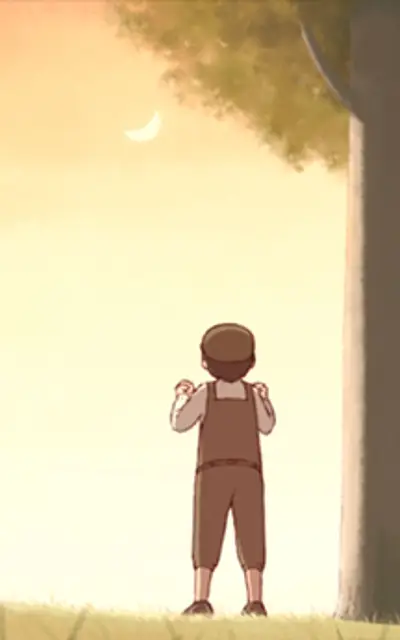
Poplar no Dengon
A music video accompanies the song "Poplar no Dengon" by Satoshi Hayashibe and the Hibari Jidou Gasshoudan, featured on NHK's Minna no Uta program. The visuals bring the song's story to life through animation. The video depicts a young girl who receives a message from a poplar tree, leading her on a journey of discovery and connection with nature. As she follows the tree's guidance, she encounters various scenes that reflect the song's themes of communication and the passage of time.
Poplar no Dengon
Special · 1 ep. · 2023
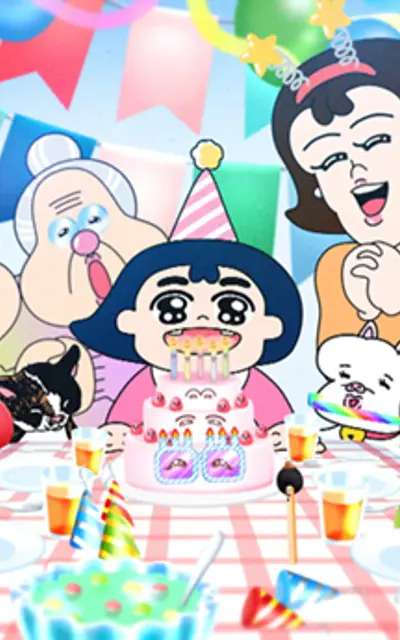
Annibirthday
A music video for the song "Annibirthday" by the band Sukima Switch, created for NHK's Minna no Uta program. The video brings the song's lyrics to life through animation, following a narrative that explores themes of time, memory, and celebration. The story centers on a young girl who embarks on a journey through a whimsical, dreamlike world. As she travels, she encounters various characters and scenes that reflect the passage of time and the importance of cherishing moments with loved ones. The video uses vibrant visuals and symbolic imagery to convey the song's message about birthdays and the connections that define our lives.
Annibirthday
Special · 1 ep. · 2023

Boku wa Jinkou Eisei
A young man gazes up at the night sky, feeling a deep sense of loneliness and longing. He imagines himself as an artificial satellite, drifting alone in the vast emptiness of space, disconnected from the world below. The music video follows his introspective journey, exploring themes of isolation, identity, and the search for connection. As the song progresses, the boundary between his earthly reality and his celestial fantasy begins to blur, leaving him to confront the distance between his inner world and the people around him.
Boku wa Jinkou Eisei
Special · 1 ep. · 2023

Passionate Elephant
An elephant has strayed from its herd. The oasis has dried up and there are no baobab trees to ram. Despite everything, the animal is determined to survive by instinct.
Passionate Elephant
ONA · 1 ep. · 2013
Hana yori mo Hana wo Sakaseru Tsuchi ni Nare
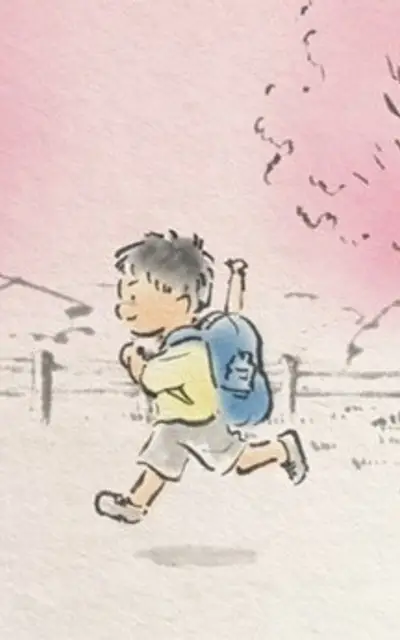
A young girl lives in a world where flowers bloom from her hands. She uses this gift to bring color and joy to her gray surroundings, planting flowers wherever she goes. However, the flowers she creates are fragile and wither quickly, leaving her feeling lonely and uncertain about her purpose. One day, she meets a mysterious boy who cannot see her flowers. He teaches her that true beauty lies not in the blooms themselves, but in the soil that nurtures them. Through their encounter, she begins to understand the value of patience and the unseen efforts that allow life to flourish.
Hana yori mo Hana wo Sakaseru Tsuchi ni Nare
Special · 1 ep. · 2024
Adana no Uta
In 1968, NHK's Minna no Uta program aired a music video for the song "Adana no Uta" by the Japanese band The Three Graces. The short film was created to accompany the song, which was a popular piece on the show. It featured the band's performance and likely included simple animation or live-action visuals typical of the program's style. The video is now considered lost media, as no known copies of it survive. Its exact content, including the visuals and any narrative elements, remains unknown to the public. The song itself is still remembered, but the video has become a piece of lost television history, with no confirmed recordings or descriptions available.
Adana no Uta
Special · 1 ep. · 1968
Kozou no Dance
A young boy dances joyfully through a vibrant, animated landscape, his movements syncing with the rhythm of a cheerful song. The music video brings to life the tune "Kozou no Dance" by Naoko Ken, originally broadcast on NHK's Minna no Uta program. The boy's dance takes him through various colorful scenes, each one reflecting the playful and uplifting spirit of the music. As he moves, the animation captures the simple joy of childhood and the universal appeal of dance.
Kozou no Dance
Special · 1 ep. · 1975
Rainbow Crew
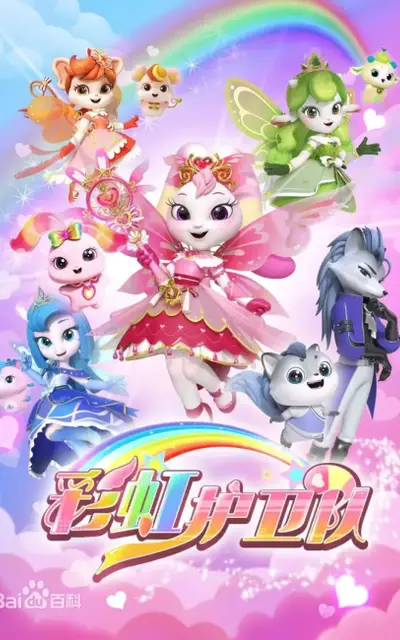
Rainbow, a smart and kind rabbit, leads the Rainbow Crew alongside her friends: Tali, a brave horse; Nelly, a gentle sheep; and Aurora, a fiery hamster. Together, they use their magical abilities to protect their town and help those in need. When negativity threatens their community, the team must find a way to turn it into positivity. Each girl brings her unique strengths to the group, but they must learn to work together and trust one another to overcome the challenges that arise.
Rainbow Crew
Short series · 26 ep. · 2024
Secret Jouju - Bijou of Star
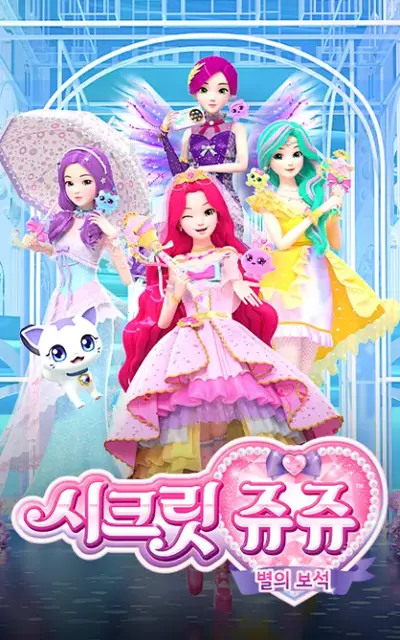
Jouju, una joven aprendiz de guardiana de las estrellas, recibe la misión de encontrar las ocultas Joubijou, gemas que mantienen el equilibrio entre el bien y el mal en el mundo celestial. Junto a sus queridas amigas Cindy, Stellar y la misteriosa Rosa, emprende una mágica aventura. Sin embargo, la astuta cazadora de tesoros Lucy se interpone en su camino, robando las Joubijou y desatando el caos. Para recuperarlas, Jouju deberá proteger a su familia y amigos de las brujas que buscan aprovechar el poder de las gemas, enfrentándose a peligros que pondrán a prueba su valentía y determinación para convertirse en una verdadera guardiana de las estrellas.
Secret Jouju - Bijou of Star
Short series · 12 ep. · 2023
Tsuru no Sugomori
Two chickens find themselves stranded on an island inhabited by cranes. The cranes take them in, and the chickens begin to adapt to their new home. However, their peaceful existence is shattered when an eagle attacks the island, killing the cranes that had adopted them. Driven by grief and a desire for justice, the chickens organize a counterstrike against the eagle. They rally together, using their wits and newfound courage to fight back. In the end, their efforts restore peace to the island, allowing all the birds to live in harmony once more.
Tsuru no Sugomori
Movie · 1 ep. · 1971
Hikouki
A music video animated to the drawings of Shinji Satou, set to the song "Hikouki" by the band Fishmans. The visuals bring the artist's distinctive style to life, creating a dreamlike and atmospheric journey that complements the music's mood. The animation flows with the rhythm of the song, blending abstract and figurative imagery in a way that captures the essence of the lyrics and the band's sound. The video serves as a visual interpretation of the track, with each frame reflecting the delicate and emotional tone of the music. Shinji Satou's artwork, known for its soft lines and melancholic beauty, becomes the core of the experience, guiding viewers through a series of scenes that feel bot
Hikouki
Special · 1 ep. · 1991
Run, Melos!
Melos, a young shepherd, is arrested for insulting the king's authority. He begs for a three-day reprieve to return home and arrange his sister's wedding, offering his best friend Selinontius as a hostage. The king agrees, warning that if Melos does not return in time, Selinontius will be executed in his place. As Melos rushes back, he faces a series of obstacles: a flooded river, bandits, and his own exhaustion. The story follows his desperate journey, driven by loyalty and the fear of betraying his friend's trust. It explores themes of friendship, sacrifice, and the struggle against tyranny, as Melos races against time to save Selinontius.
Run, Melos!
Movie · 1 ep. · 1979
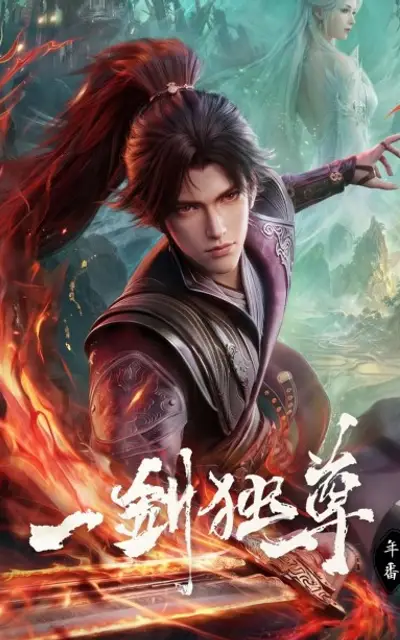
Yi Jian Du Zun
Ye Xuan is a young man who, through a series of fortuitous events, unlocks the Prison Tower, a supreme treasure of the heavens. This discovery changes his destiny and sets him on the path of sword cultivation, a journey where he must face gods, Buddhas, and immortals. As he delves deeper into the world of cultivation, Ye Xuan encounters powerful enemies and ancient secrets. With his newfound abilities, he must navigate a realm where life and death are trivial, and only the strongest survive. His resolve is tested as he wields his sword against all who stand in his way.
Yi Jian Du Zun
ONA · 52 ep. · 2027
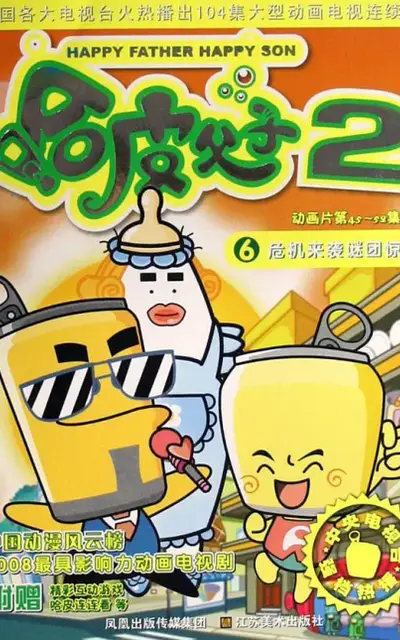

Hapi Fa Zi: Chao Neng Pao Dan 2
Hapi Fa Zi: Chao Neng Pao Dan 2
Short series · 26 ep. · 2010

Seer 7 Da Dianying: Fengkuang Jiqi Cheng
Seer 7 Da Dianying: Fengkuang Jiqi Cheng
Movie · 1 ep. · 2019

Yugo & Lala 3
Yugo, a lively girl from the human world, is invited back to the mysterious world by her friend Lala, the new patriarch. The ancient mask has shattered the peace of this magical realm, and an inevitable war threatens to erupt. Yugo, however, brings along her father, Wang Dashan, a man who is completely out of his element. Wang Dashan struggles with the sudden changes and the fear of the unknown, losing his usual cool and reliable demeanor. Yet, his fresh perspective on the bizarre world might be exactly what is needed to prevent the war. Together, Yugo and her father must navigate this strange land and find a way to restore harmony before it is too late.
Yugo & Lala 3
Movie · 1 ep. · 2016

REDTABLE
A young boy, hiding his eyes behind sunglasses, cautiously approaches a red table. He places a toy train on a rail set by someone else and turns on the switch. Their play begins as the train runs along the track, but the whimsical scene soon takes a dark turn. As the boy becomes mesmerized by the toy train, a bloodthirsty greed takes over his playtime. The innocent game transforms into something sinister, blending childhood imagination with a chilling obsession.
REDTABLE
Movie · 1 ep. · 2021
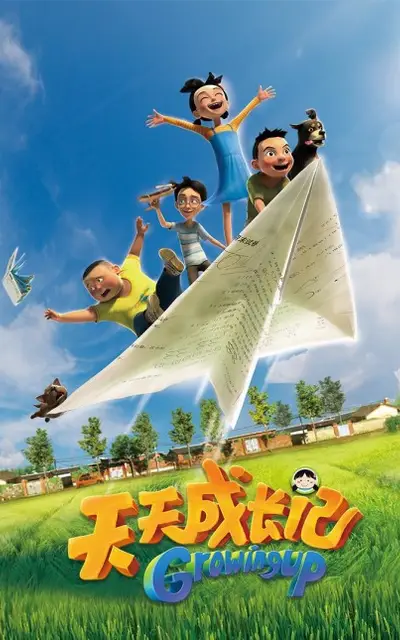
Growing Up
In a village, city girl Tiantian continues her story. This season, she acquires chicks, lambs, and a rabbit, and meets new friends. With the company of animals and companions, she learns to care for her sick mother, help those in need, and prepare dishes like zongzi. Each episode presents new experiences that lead her to develop gratitude and responsibility.
Growing Up
ONA · 13 ep. · 2017
Gachou no Monogatari
A music video created for the song "Gachou no Monogatari" by The Checkers, featured on Fuji TV's children's program Hirake! Ponkikki. It blends colorful animation with live-action footage to create a whimsical short film. The story follows a young boy who encounters a magical goose, leading him on a surreal adventure through imaginative landscapes. As the music plays, they explore fantastical settings filled with vibrant colors and playful characters, capturing the carefree spirit of childhood. Throughout the journey, the boy learns about friendship and the beauty of the world around him, guided by the goose through increasingly whimsical scenes. The video remains a nostalgic piece of 1980
Gachou no Monogatari
Special · 1 ep. · 1985

Shinpu-san no Pipe Organ
A music video brings to life the song "Shinpu-san no Pipe Organ" performed by Agnes Chan and the NHK Tokyo Children's Choir. The visuals accompany the melody as part of NHK's Minna no Uta program, blending music and animation in a short, lyrical piece. The video captures the essence of the song through its imagery, creating a harmonious experience for viewers. It stands as a standalone musical special, showcasing the collaboration between the singer and the children's choir.
Shinpu-san no Pipe Organ
Special · 1 ep. · 1987
Teruteru Bouzu wa Osamurai
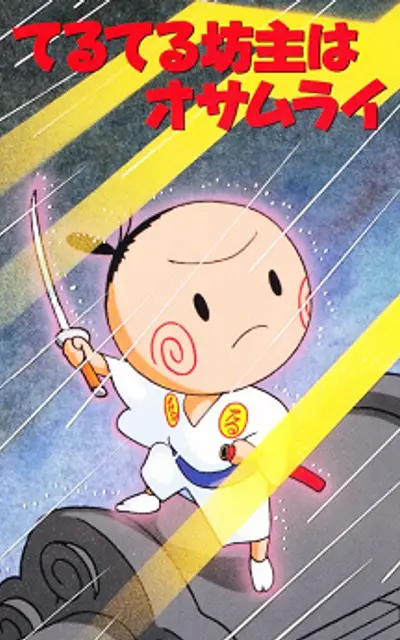
Akiko Ozawa sings the song "Teruteru Bouzu wa Osamurai" in this music video featured on NHK's Minna no Uta program. The visuals accompany the playful and rhythmic tune, bringing the lyrics to life through animation. The video presents a whimsical story centered around a teru teru bōzu, a traditional Japanese doll believed to bring good weather. As the song progresses, the doll takes on the role of a samurai, engaging in imaginative adventures that blend folklore with a lighthearted musical experience.
Teruteru Bouzu wa Osamurai
Special · 1 ep. · 1994
Tetsugaku Suru Mantohihi
A music video accompanies the song "Tetsugaku Suru Mantohihi" (Philosophizing Mandrill), which was featured on NHK's Minna no Uta program. The visuals depict a mandrill engaging in philosophical contemplation, set to the rhythm of the song. The video explores the mandrill's introspective journey through abstract and surreal imagery, reflecting on themes of existence and thought. As the music progresses, the mandrill's philosophical musings are visually represented, creating a unique blend of animation and music.
Tetsugaku Suru Mantohihi
Special · 1 ep. · 2003
Minna de Step
A music video brings to life the cheerful song "Minna de Step" performed by Fusako Amachi and the NHK Tokyo Jidou Gasshoudan. The visuals accompany the uplifting melody, creating a joyful and rhythmic experience that encourages viewers to join in the dance. Children and animated characters move in sync, celebrating the simple pleasure of stepping together to a happy tune. The video was featured on NHK's long-running program Minna no Uta, which showcases animated and live-action clips set to music. It captures the spirit of togetherness and movement that the song's title suggests, blending colorful imagery with the infectious energy of the performance. As the music plays, the scenes shift be
Minna de Step
Special · 1 ep. · 1988